The Death of the Line: A Student’s Guide to Sovereign Intelligence
1. Introduction: What is “The Line”?
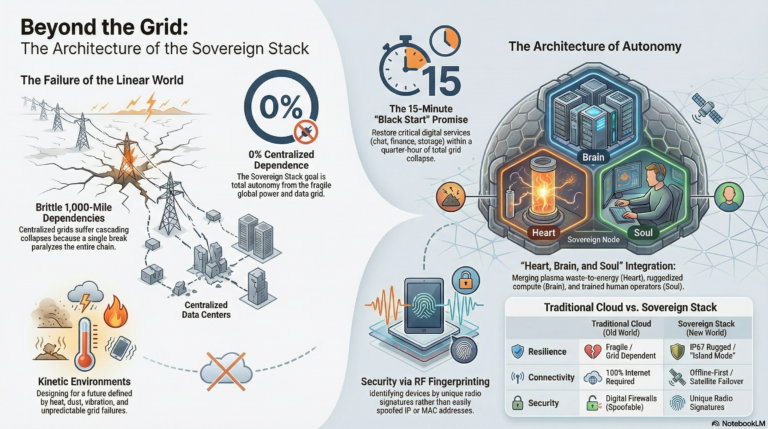
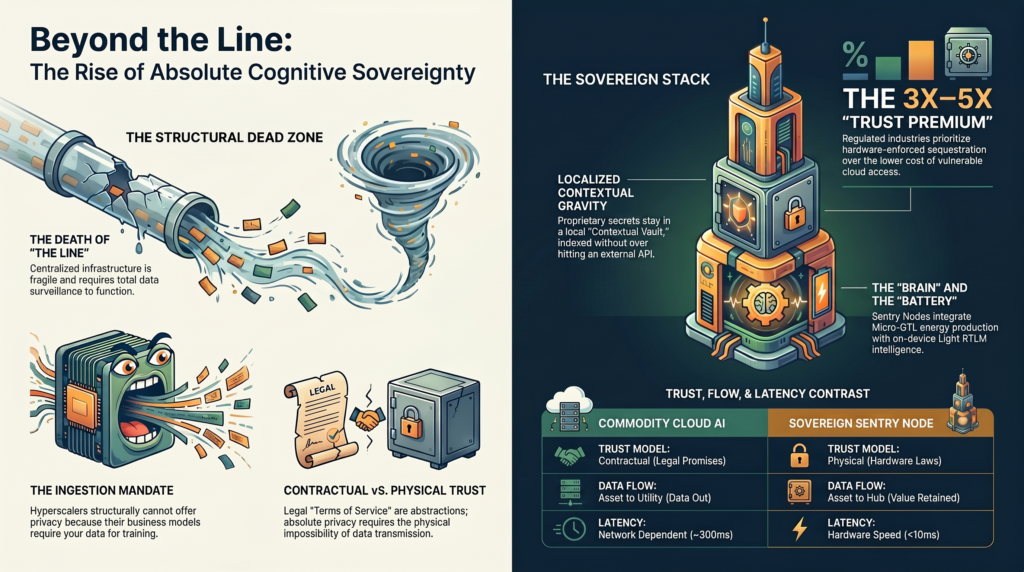
For nearly a century, our civilization has been built upon Linear Topologies—fragile, centralized dependencies delivered via “The Line.” This refers to the long-haul fiber optic cables that carry our data and the high-voltage transmission wires that deliver our power. To live “On the Line” is to live as a perpetual subscriber, tethered to infrastructure that is structurally prone to failure, surveillance, and corporate whim.
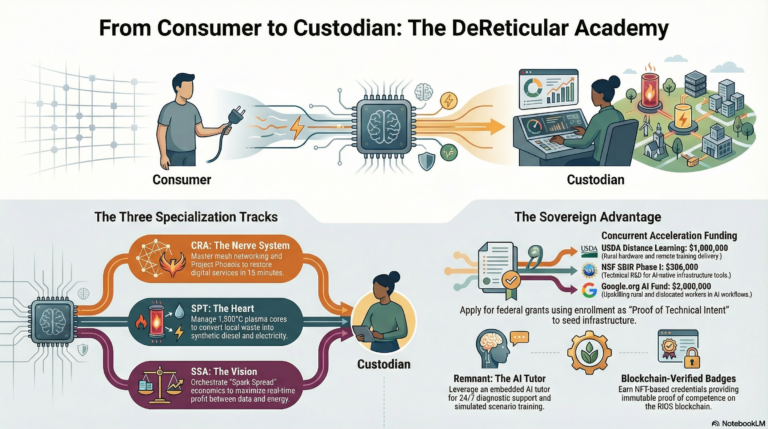
We are now witnessing “The Death of the Line.” This is not a collapse into chaos, but a transition toward Nodal Topologies. As centralized systems become increasingly heavy with telemetry and grid instability, the value of technology is shifting away from centralized delivery and toward personal autonomy. This guide introduces the concept of Sovereign Intelligence: the birth of a world where you move “Above the Line” to own your infrastructure rather than renting your existence.
The fragility of the “Line” is no longer a theoretical risk; it is a structural certainty. To achieve resilience, we must move from a state of dependency to one of Nodal Autonomy.
——————————————————————————–
video
2. The Cloud vs. The Node: A Tale of Two Systems
The fundamental difference between the current paradigm and the sovereign future lies in the nature of trust. While the Cloud relies on “Contractual Trust” (legal promises in a Terms of Service agreement), a Sovereign Node relies on “Physical Trust” enforced by the laws of physics and hardware design.
The Power Shift: Cloud vs. Sovereign Node
| Feature | Centralized Cloud (The Line) | Sovereign Node (The Perimeter) |
| Data Flow | Telemetry: Continuous data ingestion for model training. | Local Vault: Value is sequestered; data stays within the physical hub. |
| Latency | Network Dependent: Internet round-trip jitter (~300ms+). | Deterministic: Hardware speed (<10ms) via local processing. |
| Trust Model | Contractual: You trust a legal document and a cloud provider. | Physical: Trust is hardware-enforced (Physical Incapacity). |
| Reliability | Fragile: API-dependent; fails if the “Line” is cut. | Resilient: Air-gapped and immune to external infrastructure failure. |
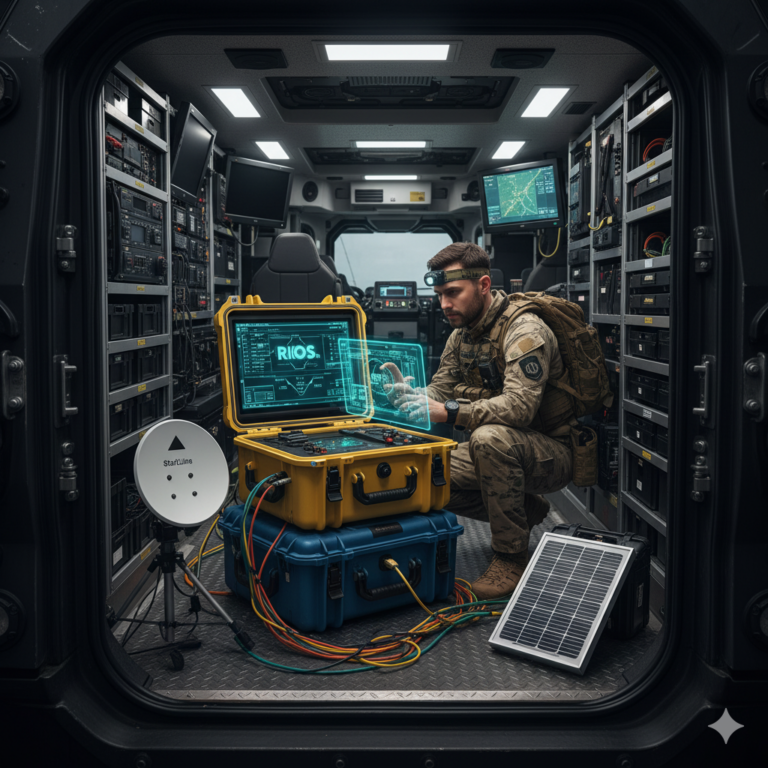
| Dependency | Internet/API Tethered: Constant connection required. | Fully Offline: Operates in “Submarine Mode” without a wire. |
The “Trust Premium” and Physical Incapacity
In high-stakes industries, the cost of being “wrongly observed” is often far higher than the value of the intelligence itself. This creates the Trust Premium—the willingness to pay significantly more for a system that is physically incapable of leaking data. By utilizing GPIO-controlled physical relays that can de-energize network cards at the hardware level, Sovereign Nodes offer a guarantee that no software update can override: the data cannot leave because there is no physical path for it to travel.
——————————————————————————–
podcast
3. The Sovereign Stack: The Brain and The Battery
To escape the Line, a node must be self-sufficient in both intelligence and energy. This is the “Sequestration Move”—bringing the two most vital resources inside your physical perimeter.
The Brain: Light RTLM (Real-Time Language Model)
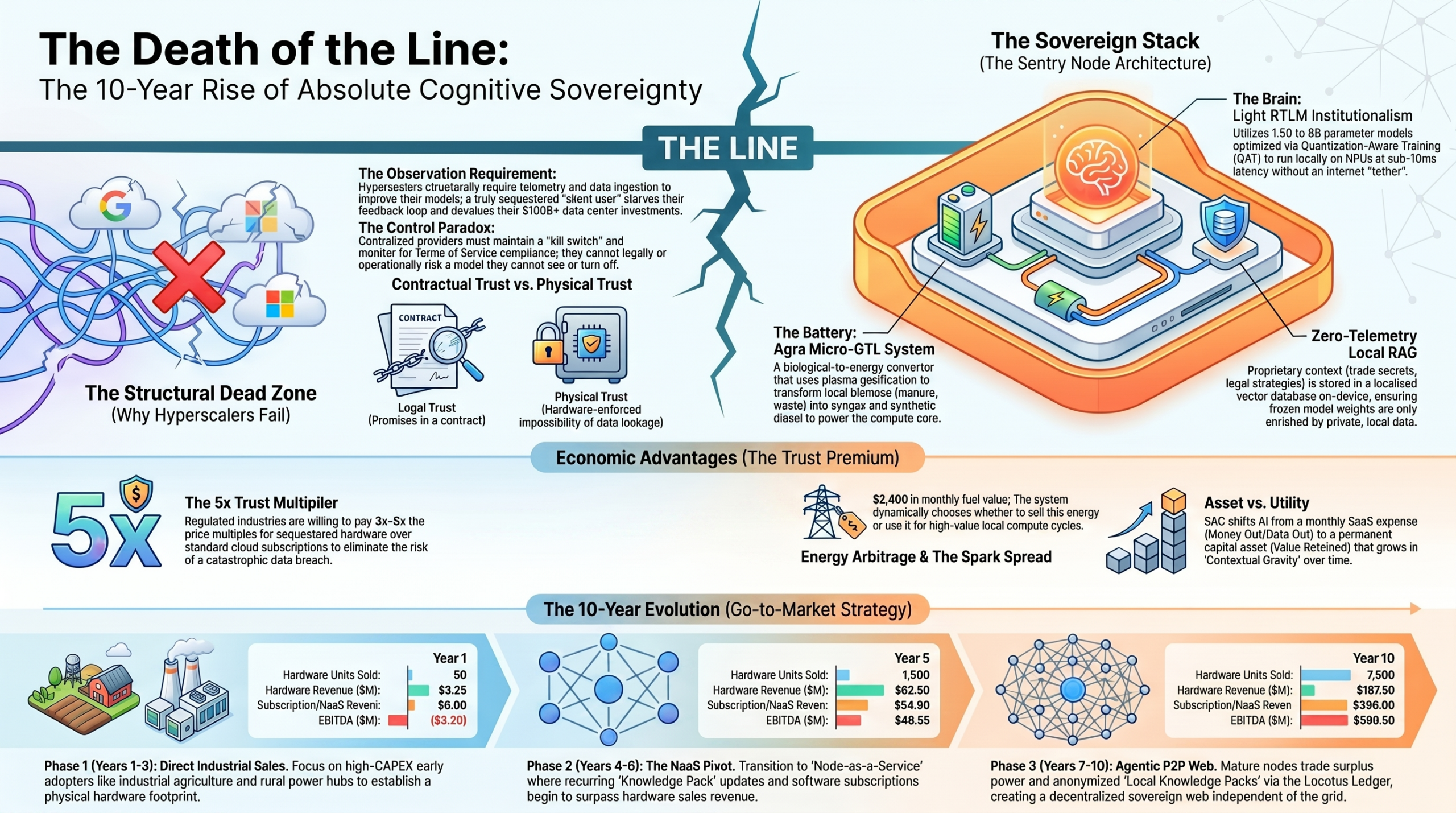
The “Brain” of a sovereign node is not a massive cloud model, but a Light RTLM—a purpose-built model ranging from 1.5B to 8B parameters. These models are optimized through Quantization-Aware Training (QAT) and executed at INT4 Precision on dedicated Neural Processing Units (NPUs). This allows a small chip to perform institutional-grade reasoning without an internet tether.
- Instant Response: By bypassing the cloud round-trip, the NPU delivers inference at the speed of thought, providing deterministic latency.
- Zero Telemetry: Because the model is “frozen” locally, it requires no feedback loops. Your prompts never feed a central “flywheel.”
- Local Context (Local RAG): The AI utilizes a localized vector database to learn your proprietary secrets, manufacturing recipes, or legal strategies, keeping them safe in an encrypted hardware enclave.
The Battery: Agra Dot Energy & Micro-GTL
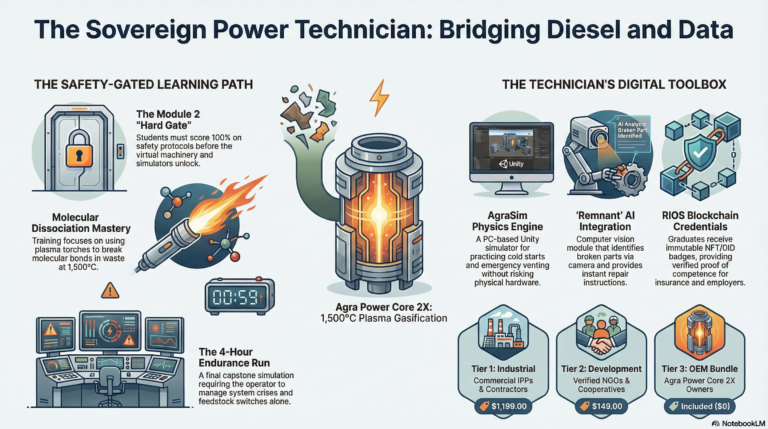
A sovereign brain requires sovereign power. The Sovereign Sentry enclosure integrates with Agra Dot Energy systems using Micro-GTL (Gas-to-Liquids) technology. This process uses Plasma Gasification to convert local biomass (such as farm waste) into syngas, which is then refined via Fischer-Tropsch Synthesis into synthetic diesel.
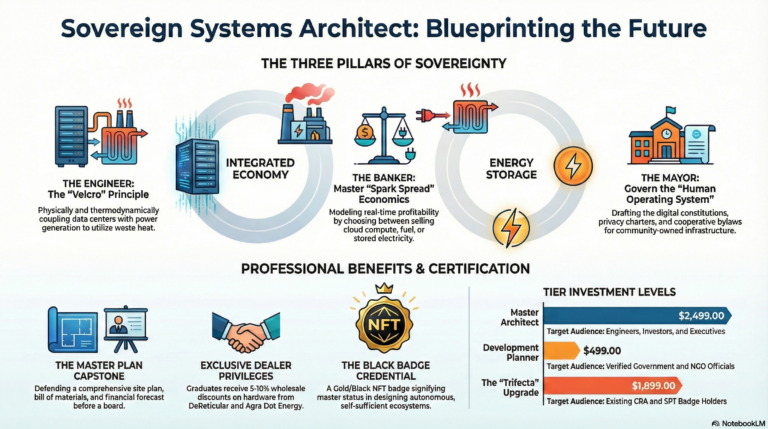
This creates a high-efficiency thermodynamic loop. The system is governed by the Spark Spread Arbitrage Coefficient (C_{ssa})—an economic decision engine that determines whether it is more profitable to sell fuel to the grid or to convert that energy into local high-value compute power.
——————————————————————————–
4. The “Dead Zone”: Why Big Tech Can’t Follow You
Hyperscalers like Google and Microsoft are “structurally banned” from offering true sovereignty. They operate in a “Dead Zone” created by three inescapable pillars of their business models:
- The Ingestion Mandate (The Telemetry Paradox): Big Tech valuations rely on data ingestion. Their models need your data to learn. To offer you a truly sequestered node is “intelligence suicide” for them; they cannot improve their future models if they cannot see your usage.
- The Control Paradox: Centralized providers must monitor usage to enforce “Terms of Service” and minimize liability. They cannot verify compliance on a device they physically cannot see or “kill” remotely.
- The Margin Erosion: Hyperscalers have spent hundreds of billions on centralized data centers. They are economically incentivized to keep you as a renter of “access” rather than an owner of “assets.”
This creates a massive opportunity for students and entrepreneurs to fill the gap with hardware that Big Tech is physiologically incapable of providing.
——————————————————————————–
5. Real-World Applications: Sovereignty in Action
The transition “Above the Line” allows for Compliance by Omission. If a device physically cannot transmit data, it is mathematically exempt from cloud transmission audits (HIPAA/SEC). This is being applied in several high-impact verticals:
- Sovereign Legal/Finance: M&A firms and attorneys use sequestered nodes to ensure Attorney-Client Privilege at the chip level. By processing case strategy in a “Vault” with no wire, they eliminate the risk of the “Subpoena of the Cloud.”
- Rural Power Hubs: Farms use Agra Dot Energy to turn manure into “Green Compute Credits.” They become local centers of intelligence, processing data for the community using energy harvested from their own soil.
- Precision Manufacturing: Using Submarine Mode, factories protect their “yield secrets” and chemical recipes from corporate espionage. The AI manages the fabrication logic entirely offline, ensuring proprietary workflows never touch a public network.
——————————————————————————–
6. Conclusion: From Rented Utility to Personal Asset
The coming decade marks the shift from “AI-as-a-Subscription” to “AI-as-a-Sovereign-Asset.” As generic intelligence becomes a cheap commodity “Below the Line,” the value of governing that intelligence “Above the Line” will skyrocket.
In the future, these independent nodes will communicate via Web MCP (Model Context Protocol), creating a decentralized mesh where compute and energy are traded peer-to-peer without centralized oversight. By embracing Absolute Cognitive Sovereignty, you stop paying a permanent tax on your data and start building infrastructure that you own. The node is your fortress; the power is your independence; and the intelligence is yours alone.