DeReticular and Agra Dot Energy: Generation 5 Sovereign Infrastructure Study Guide
This study guide provides a comprehensive review of the DeReticular Generation 5 (Gen 5) product ecosystem and the Agra Dot Energy infrastructure. It is designed to facilitate a deep understanding of localized energy production, sovereign compute, and resilient telecommunications as outlined in the technical reports.
Part 1: Short-Answer Quiz
Instructions: Provide a 2-3 sentence response for each of the following questions based on the provided source context.
- What is the central “Core Doctrine” of Agra Dot Energy, and how does it manifest in their operational focus?
- How does the 700V DC busbar architecture in Pawnee GenSets improve electrical efficiency?
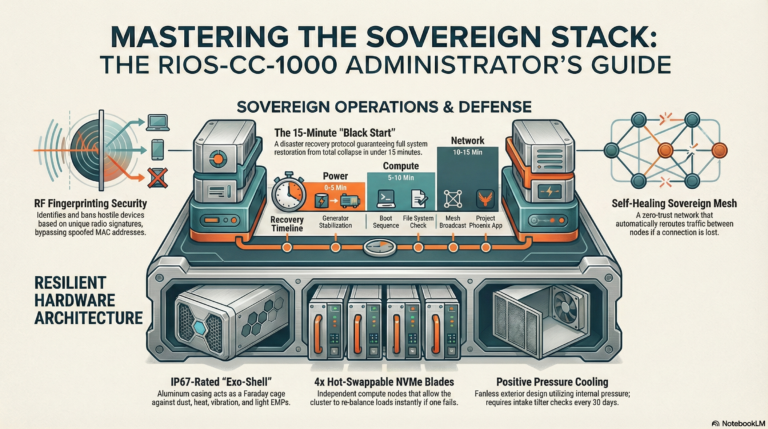
- Explain the role of the RIOS-CC-1000 AI Compute racks in the regulatory strategy for microgrid deployment.
- What technical advantage does a Wankel-type rotary engine offer over a traditional piston engine according to the reports?
- Describe the function of the 80x Parabolic Solar Thermal Array in the Agra Dot Energy physical stack.
- What is the “AI Compute Arbitrage Multiple,” and why is it significant for agricultural operators?
- What are the primary differences between the WISP-in-a-Box “Professional” and “Agentic” models?
- How does the West Virginia Power Generation and Consumption Act (H.B. 2014) impact the timeline for infrastructure projects?
- Identify the three high-value outputs produced by the Agra Plasma Gasification and GTL process.
- What is the purpose of the DR5-COG-SCADA-ISO Gateway within a sovereign microgrid?
Part 2: Answer Key
- Agra Dot Energy Doctrine: The core doctrine is “Agriculture Can Both Produce and Consume Energy.” This is operationalized through behind-the-meter prime power, waste-to-energy gasification, and co-located sovereign AI compute that consumes the energy produced on-site.
- 700V DC Busbar Efficiency: By utilizing direct power rectification to a 700V DC busbar, the system achieves a 97.7% power chain efficiency. This architecture bypasses traditional AC-to-DC conversion stages, significantly reducing the energy losses typical of standard power systems.
- Regulatory Strategy of RIOS-CC-1000: The compute racks act as a “captive baseload consumer” that uses over 70% of generated power. This high consumption ratio allows the site to qualify as an independent microgrid district under specific statutes, exempting it from Public Service Commission (PSC) rate regulations and utility interconnection queues.
- Rotary vs. Piston Engines: Rotary engines, such as those used by Pawnee Power, feature only three primary moving parts (rotor, eccentric shaft, and gearing), which drastically reduces mechanical complexity. This design minimizes vibration, lowers acoustic and thermal signatures, and eliminates common failure points like timing belts and valves.
- Solar Thermal Array Function: The array uses linear parabolic troughs to concentrate solar radiation 80x onto pressurized receiver tubes, producing 350°C industrial process steam. This steam is used to preheat biomass gasification vessels, allowing the gasification systems to operate with zero daytime fossil fuel consumption.
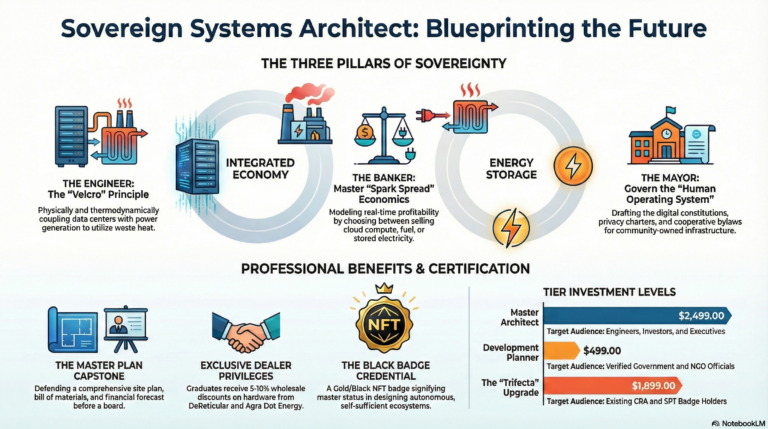
- AI Compute Arbitrage Multiple: The 16.6x arbitrage multiple represents the increased value gained by converting agricultural-derived electricity into AI compute or cryptographic processing versus selling it back to the grid. This allows operators to monetize “stranded” energy at a much higher rate than standard utility feed-in tariffs.
- WISP-in-a-Box Model Differences: The Professional model is a turnkey micro-ISP hub designed for bandwidth monetization (reselling Starlink LEO data), whereas the Agentic model is an autonomous gateway featuring 100% air-gapped Edge AI. The Agentic model focuses on vehicle-to-vehicle (V2V) synchronization and mesh coordination in “Island Mode” without internet access.
- Impact of H.B. 2014 on Timelines: This legislation enables projects to bypass multi-year utility grid interconnection queues, which currently average three to seven years. By operating as a certified microgrid district, deployments can be completed in as little as 60 to 90 days.
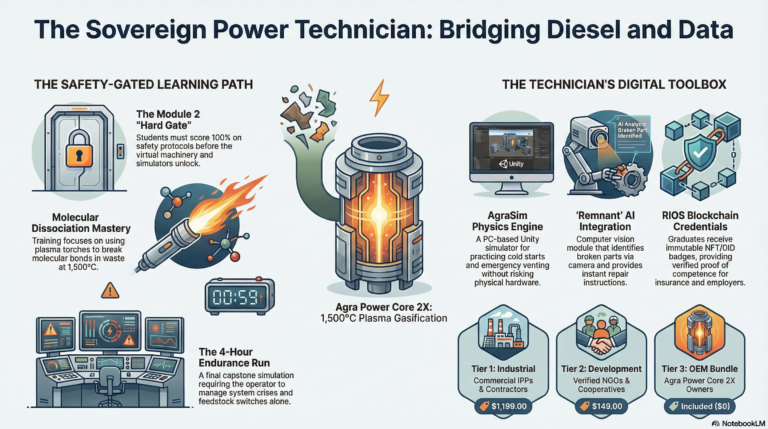
- Plasma Gasification Outputs: The process produces Clean Synthesis Gas (Syngas) for direct combustion in generators, renewable hydrocarbons (Renewable Diesel and Sustainable Aviation Fuel), and premium agricultural Biochar valued at $350 per ton.
- SCADA-ISO Gateway Purpose: The gateway isolates legacy industrial microgrid protocols (like Modbus and DNP3) using an Infineon TPM 2.0 cryptoprocessor. It ensures deep packet inspection and hardware-rooted security to prevent external threats from accessing critical infrastructure controls.
Part 3: Essay Questions
Instructions: Use the provided source context to develop detailed arguments for the following prompts. (Answers not provided).
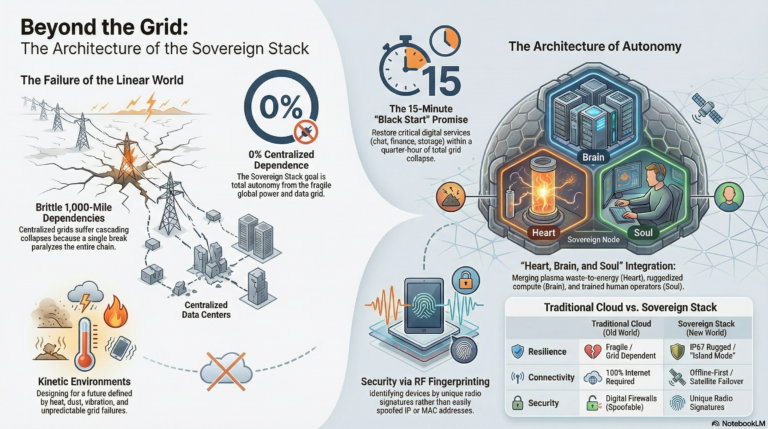
- The Sovereignty Mandate: Analyze how the DeReticular ecosystem integrates energy, compute, and communications to achieve “Total Sovereignty” for a municipal or defense-adjacent client.
- Economic Disruption in Rural Markets: Discuss how the combination of waste-to-energy gasification and AI compute arbitrage changes the financial viability of large-scale dairy and livestock operations.
- Bypassing the Centralized Grid: Evaluate the regulatory and technical hurdles associated with “behind-the-meter” infrastructure and how DeReticular’s “Certified Microgrid District” model addresses these challenges.
- Technical Resilience and Anti-Fragility: Examine the hardware choices made across the Generation 5 line (rotary engines, LFP batteries, air-gapped NPUs) and explain how they contribute to a system capable of operating in “Island Mode” during wide-area blackouts.
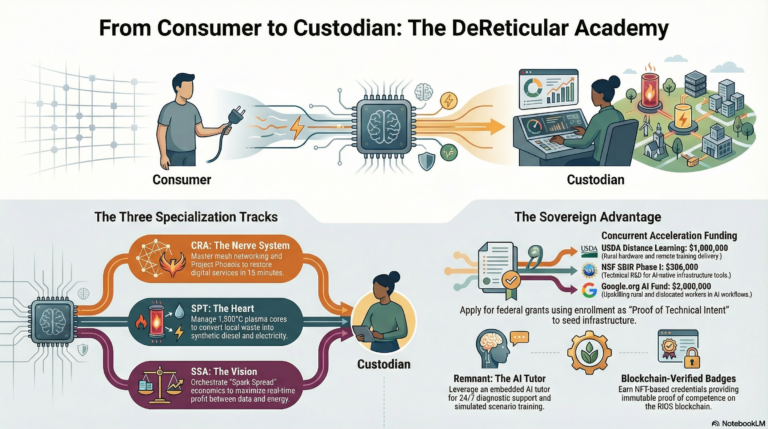
- The Role of Non-Dilutive Capital: Explain how federal grant programs (USDA REAP, FEMA BRIC, IRA) are leveraged within the DeReticular Venture Studio to facilitate the deployment of expensive, high-tech infrastructure in rural areas.
Part 4: Glossary of Key Terms
Term Definition
700V DC Busbar A high-voltage direct current power distribution architecture that achieves 97.7% efficiency by eliminating AC conversion losses.
Air-Gapped A security measure that ensures a computer or network is physically isolated from unsecured networks, such as the public internet.
BESS Battery Energy Storage System; utilizing Lithium Iron Phosphate (LFP) chemistry for stationary power storage and grid ride-through.
Biochar A charcoal-like substance produced from biomass gasification, used for soil remediation and carbon sequestration, valued at $350/ton.
Captive Power Ratio The percentage of on-site generated power consumed by a co-located industrial load; 84.8% is the documented average for Agra Dot systems.
GTL (Gas-to-Liquids) A catalytic process that converts synthesis gas into high-value liquid fuels like Renewable Diesel or Sustainable Aviation Fuel (SAF).
Island Mode An operational state where a microgrid or communication network functions entirely independently of public utilities or the global internet.
LCOE Levelized Cost of Energy; for Agra Dot Energy, this is modeled at $0.038 per kilowatt-hour.
Locutus A decentralized P2P ledger engine used for vehicle-to-vehicle (V2V) state and telemetry synchronization.
MSI (Metacognitive Swarm) An AI architecture that orchestrates multiple autonomous agents to manage complex microgrid loads or robotic fleets.
NPU Neural Processing Unit; specialized hardware used in the Remnant AI Core for high-speed, local AI inference.
Plasma Gasification A high-temperature process that uses plasma torches to convert organic waste into clean synthesis gas (CO + H2).
Rotapower® A licensed multi-rotor Wankel engine design characterized by having only three moving parts and high fuel versatility.
Syngas Synthesis Gas; a mixture primarily of carbon monoxide and hydrogen used as a clean-burning fuel for internal combustion engines.
TPM 2.0 Trusted Platform Module; a hardware-based security chip used to provide a “root of trust” for industrial SCADA gateways.
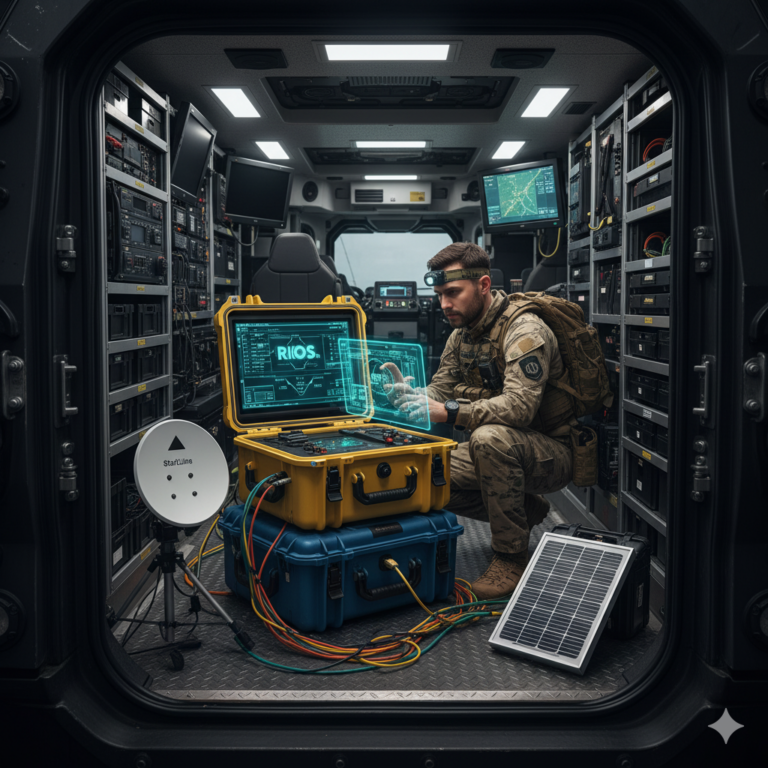
WISP-in-a-Box™ A modular, ruggedized telecommunications platform for deploying micro-ISPs and autonomous mesh networks.
https://academy.dereticular.com/wp-content/uploads/2026/09/Sovereign_Infrastructure_Blueprint.pdf