Sovereign Infrastructure Consortium & SIEA: Master Study Guide
This study guide serves as a comprehensive review of the Sovereign Infrastructure Education Alliance (SIEA) and DeReticular Consortium’s Master Single Source of Truth (SSOT). It covers the theoretical framework, technical architecture, and operational standards required to implement localized, off-grid infrastructure.
Part 1: Short Answer Quiz
Instructions: Provide a 2–3 sentence response for each of the following questions based on the source context.
- What is the “Sovereign Stack” and what are its primary components?
- Define Noel’s Law (The Campus Strategy).
- Explain the distinction between the Cognitive, Operational, and Physical layers of the ecosystem.
- What is the “Hub-and-Spoke Separation Model” in the context of the consortium’s eight web properties?
- How does the consortium manage its podcast and audio distribution architecture?
- What are the specific typography and layout requirements for the consortium’s web presence?
- What is the role of the “Evidence-Control Record Structure” in federal grant readiness?
- Describe the difference in function between agra.energy and energy.dereticular.com.
- What are the primary technical hosting and security platforms mandated for the Sovereign Consortium?
- Explain the purpose of the Technology Readiness Level (TRL) scale within the Evidence Library.
Part 2: Quiz Answer Key
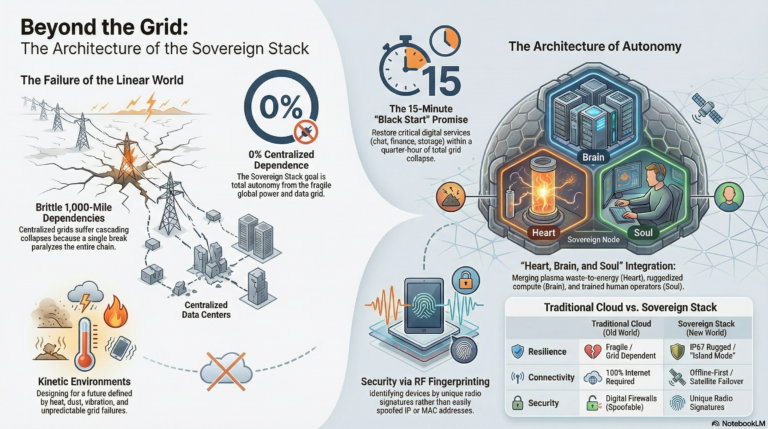
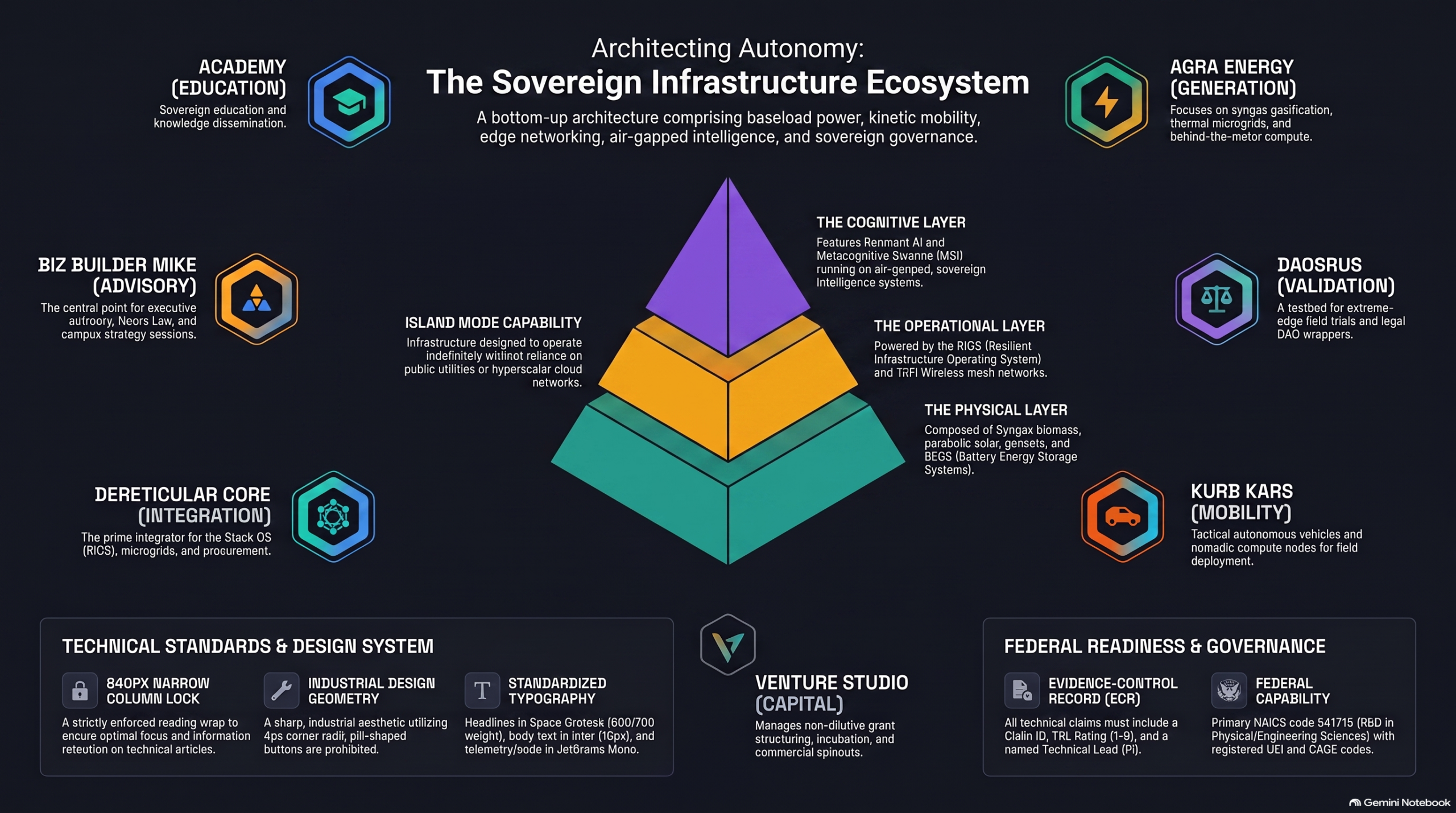
- The Sovereign Stack is an infrastructure framework built from the physical layer up, encompassing baseload power, kinetic mobility, edge networking, air-gapped intelligence, and sovereign governance. It is designed to achieve sustained “Island Mode” operation, allowing a system to function without reliance on public utilities or hyperscaler cloud networks.
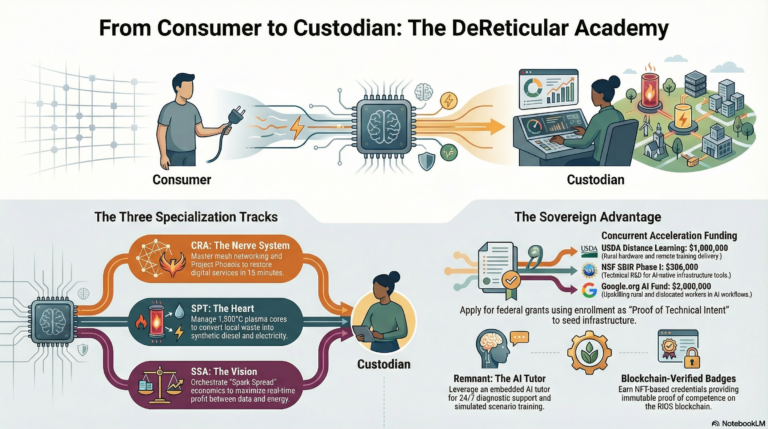
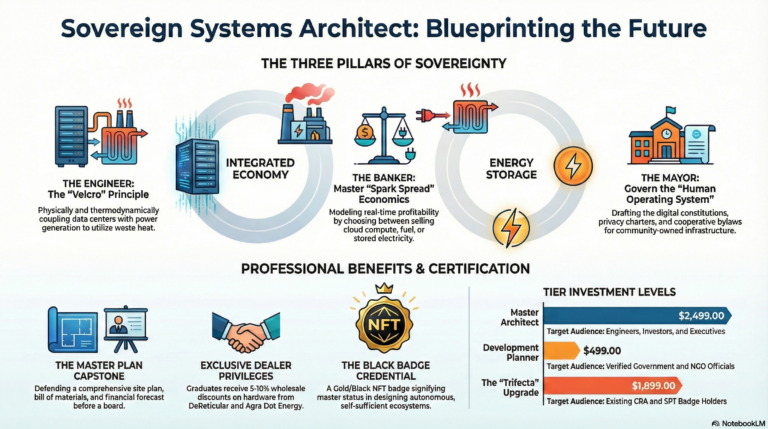
- Noel’s Law states that municipalities, agricultural cooperatives, and institutional campuses must transition from being mere consumers of energy and compute into autonomous energy producers and captive compute operators. This strategy aims to foster localized autonomy and resilience against macro-grid failures.
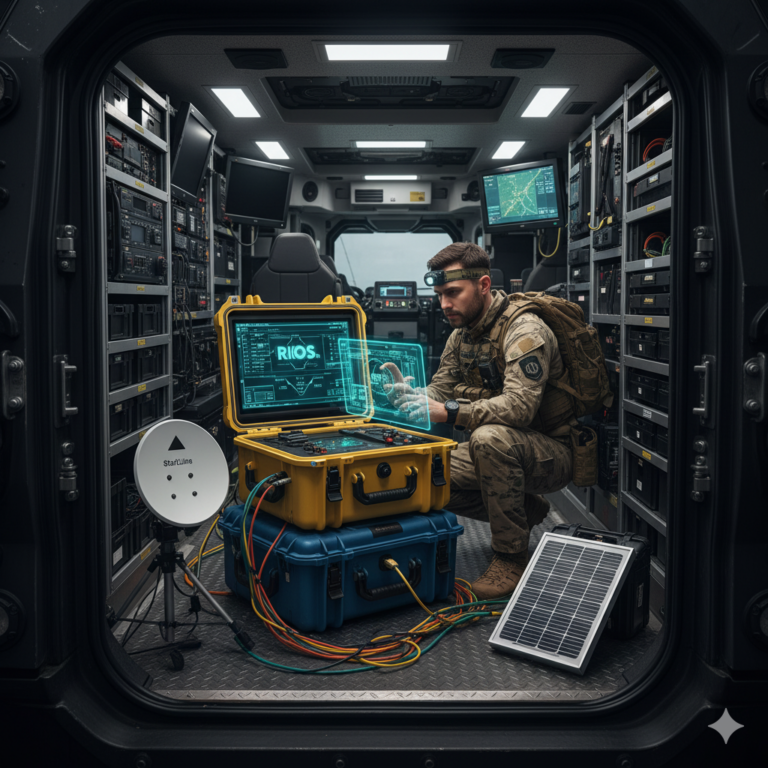
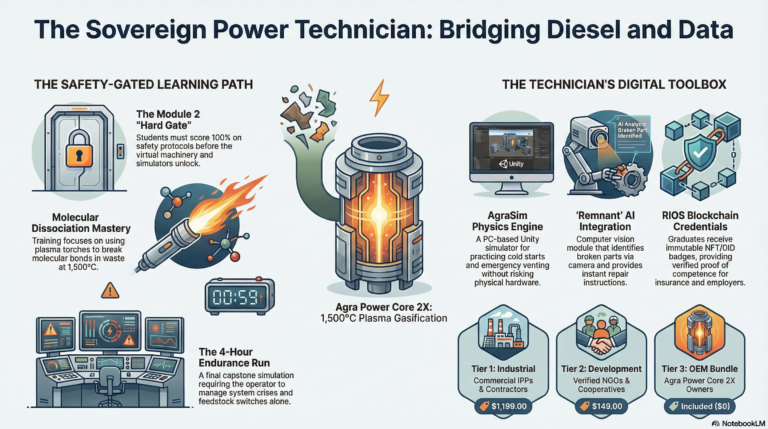
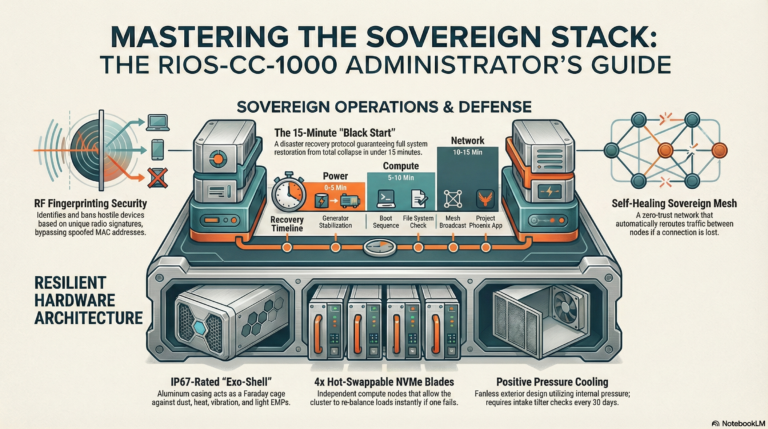
- The Cognitive Layer utilizes air-gapped sovereign intelligence and metacognitive swarms; the Operational Layer employs the RIOS operating system and TriFi Wireless for point-of-need routing; and the Physical Layer consists of hardware like syngas biomass, solar, and kinetic mobility units.
- The Hub-and-Spoke Separation Model ensures a strict division of labor between the eight properties to prevent overlap between doctrine, engineering documentation, and commercial transactions. For instance, while the Academy serves as the media hub, other sites like Kurb Kars or Agra Energy focus on specific kinetic or energy hardware.
- Audio is ingested centrally at academy.dereticular.com using the Seriously Simple Podcasting plugin and then distributed via the Castos CDN. Satellite properties embed this audio using Presto Player blocks, which inherit local site styles without the overhead of additional plugins.
- The design system requires a 1280px canvas with a strictly enforced 840px narrow reading column for single posts. It utilizes Space Grotesk for headings, Inter for body text, and JetBrains Mono for telemetry, maintaining a sharp, industrial aesthetic with 4px corner radii.
- The Evidence-Control Record Structure provides a standardized format for documenting quantitative assertions, including Claim IDs, verification methods (like laboratory test reports), and TRL ratings. This structure ensures that marketing claims are separated from the rigorous technical data required for federal solicitations (DOE, DOD, etc.).
- agra.energy is the public-facing portal dedicated to the agri-energy baseload narrative and syngas microgrids. In contrast, energy.dereticular.com is a locked technical repository used for formal engineering specifications, whitepapers, and historical archive data.
- The consortium uses WP Engine Enterprise Edge for hosting and Cloudflare Enterprise (via WP Engine Global Edge Security) for edge security and CDN services. The core software stack is built on WordPress using the Kadence Theme and Kadence-child engine.
- The TRL (Technology Readiness Level) scale is used to categorize the maturity of a technology from TRL-1 to TRL-9. It helps the consortium track the development stage of its assets, ensuring that technical claims in the Evidence Library are grounded in their actual state of readiness for deployment or federal R&D proposals.
Part 3: Essay Questions
Instructions: Use the provided source context to develop comprehensive responses for the following topics.
- The Philosophy of Spherical Resilience: Analyze how the consortium’s distributed, non-linear node architecture is designed to withstand macro-grid failures and regulatory choke-points.
- The Multi-Property Ecosystem: Discuss the strategic necessity of maintaining eight distinct web properties and how the “Unified Top-Level Navigation” and “Canonical Terminology” prevent fragmentation.
- The Role of RIOS and Remnant AI: Evaluate the importance of air-gapped intelligence and a resilient operating system in achieving sovereign infrastructure autonomy.
- Federal Compliance and Workforce Development: Examine how the SIEA’s 501(c)(3) status and the Technical Training Ladder on the Academy site prepare the consortium for large-scale federal R&D and workforce dissemination.
- Technical Standard Operating Procedures: Detail the importance of SOP-MIG-01 and SOP-PUB-01 in maintaining brand consistency and operational security across the consortium’s digital footprint.
Part 4: Glossary of Key Terms
Term Definition
BESS Battery Energy Storage System; used in the physical layer for power management.
Castos CDN The cloud content delivery network used to host MP3 audio, provide IAB analytics, and manage global podcast feeds.
Island Mode An operational state where infrastructure functions autonomously, disconnected from public utilities and the central internet.
Kurb Kars The entity within the consortium focused on nomadic hardware, kinetic autonomy, and tactical autonomous vehicles.
MSI (Metacognitive Swarms) Advanced, air-gapped sovereign intelligence operating within the cognitive layer of the Sovereign Stack.
Noel’s Law The doctrine mandating that institutions transition from being energy/compute consumers to autonomous producers and operators.
Project Octagon A specific project/testbed associated with extreme-edge field trials and sovereign factory blueprints.
RIOS Resilient Infrastructure Operating System; the canonical edge operating engine for the consortium.
SIEA Sovereign Infrastructure Education Alliance; the 501(c)(3) educational and workforce alliance layer.
Sovereign Stack The five-tier infrastructure model: baseload power, kinetic mobility, edge networking, air-gapped intelligence, and sovereign governance.
Syngas Synthetic gas produced via biomass gasification, used as a primary fuel source in the consortium’s physical power layer.
TRL Technology Readiness Level; a 1–9 scale used to define the maturity of a technology or hardware asset.
TriFi Wireless The mandated term and formatting for the consortium’s mesh and wireless communication technology.
WP Engine GES Global Edge Security; the enterprise-level security layer provided via Cloudflare to protect the consortium’s web properties.