Topeka Small Business Incentive Application DeReticular and Agent-to-Agent (A2A) Systems: A Comprehensive Study Guide
This study guide provides a detailed overview of the Agent-to-Agent (A2A) reservation landscape, the Rural Infrastructure Operating System (RIOS), and the strategic expansion of DeReticular into Topeka, Kansas. It is designed to facilitate a deep understanding of autonomous machine-to-machine commerce and its practical application in off-grid industrial infrastructure.
Part 1: Short-Answer Quiz
Instructions: Answer the following questions in 2-3 sentences based on the provided source materials.
- What is the “Spark Spread” in the context of DeReticular’s operations?
- Identify the five layers of the A2A reservation protocol stack.
- What distinguishes the Model Context Protocol (MCP) from the Agent2Agent (A2A) protocol?
- Describe the primary function of the Rural Infrastructure Operating System (RIOS).
- What is Project Octagon, and how does it utilize A2A protocols for load balancing?
- Explain the role of TPM 2.0 hardware-secured oracles in DeReticular’s system.
- What specific financial incentives has DeReticular requested from the GO Topeka program?
- How does Agra Energy support the “Sovereign Stack” model?
- What are “Kurb Kars,” and how do they interact with the microgrid via A2A?
- How do Bayesian Utility Functions enhance the negotiation process between AI agents?
podcast
Part 2: Answer Key
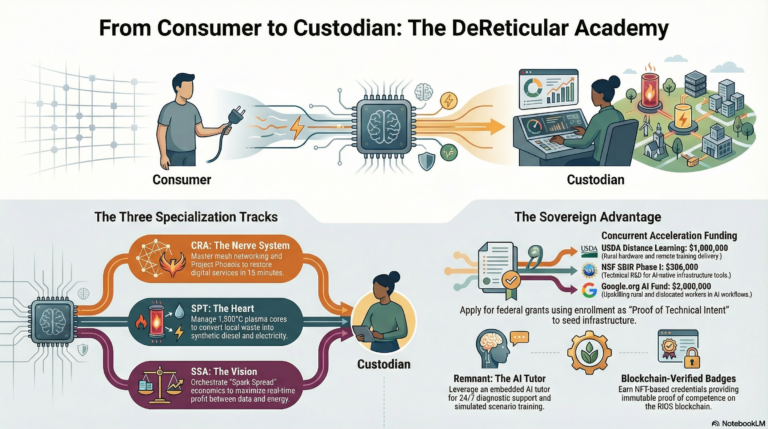
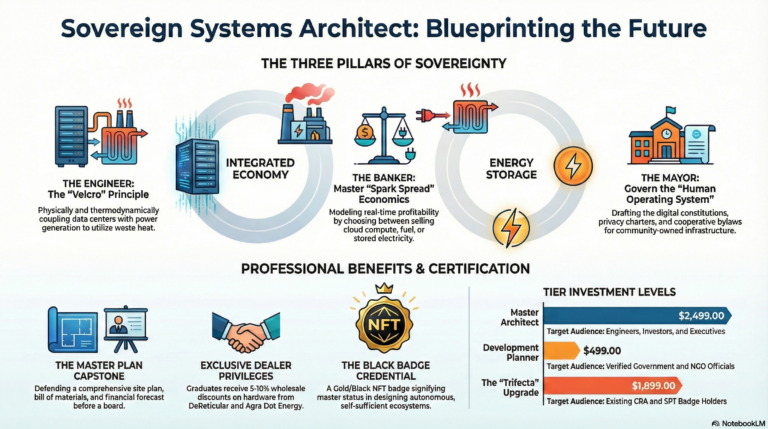
- The Spark Spread refers to the margin between the cost of local power generation (produced via plasma gasification of agricultural waste) and the global market rates for AI inference. DeReticular’s agents evaluate this real-time spread to decide whether to use energy for local GPU clusters or sell power back to the grid.
- The A2A stack consists of five layers: 1. Transport & Hardware (HTTPS, TPM 2.0), 2. Tool Connectivity (MCP), 3. Inter-Agent Protocol (Agent Cards), 4. Negotiation & Contracts (Bayesian Utility), and 5. Settlement & Escrow (x402, ERC-8183).
- The Model Context Protocol (MCP) is a 1-to-1 vertical binding that connects an individual LLM agent to internal tools and APIs. In contrast, the Agent2Agent (A2A) protocol is a horizontal peer-to-peer standard for discovery, task delegation, and artifact passing between independent agents.
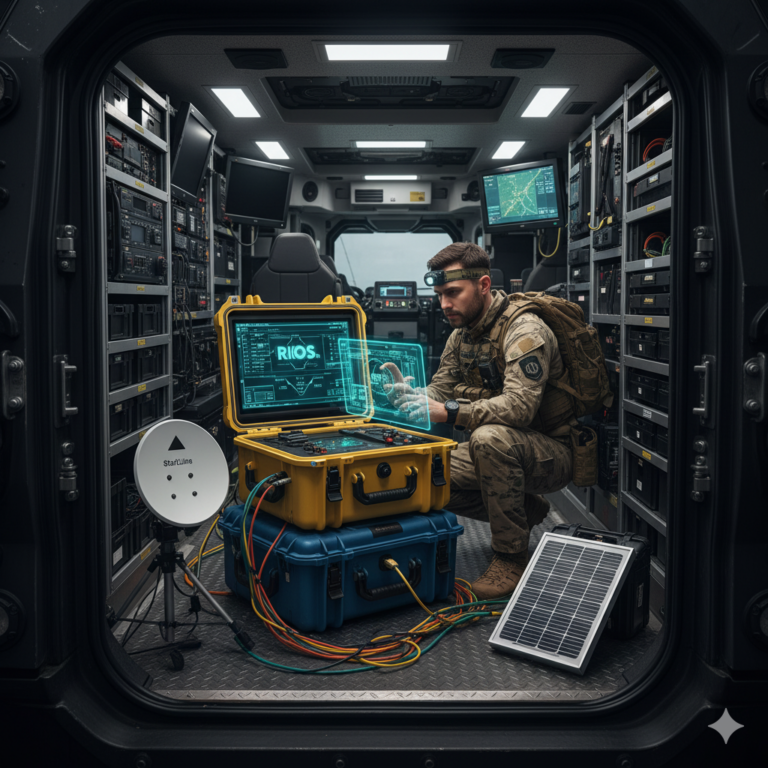
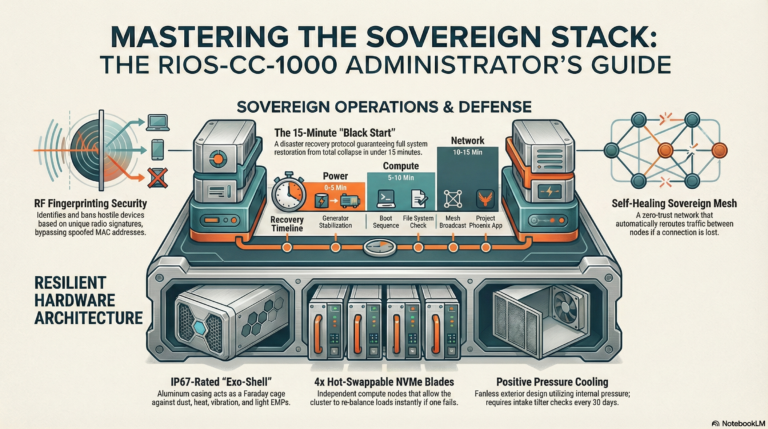
- RIOS serves as the AI-native orchestration layer and local authority for rural micro-industrial campuses. It manages the local state machine, coordinating assets like edge compute, energy storage, and microgrids while exposing “Agent Cards” for external discovery.
- Project Octagon is a global mesh network of eight strategic nodes (including Uganda, Canada, and Kansas) that communicates over Hyphanet. It uses A2A task messages to dynamically balance computational workloads across global time zones based on local energy availability.
- TPM 2.0 oracles act as a physical verification layer to ensure that work performed in the physical world (like electricity delivery or syngas production) matches digital contracts. Once these cryptographically signed sensors confirm task completion, they trigger the release of funds from escrow.
- DeReticular requested a total of $45,000 in matching grants, divided into: $15,000 for Equipment Purchase, $10,000 for Construction & Renovation, $10,000 for Proof of Concept (POC), and $10,000 for Global Markets Matching.
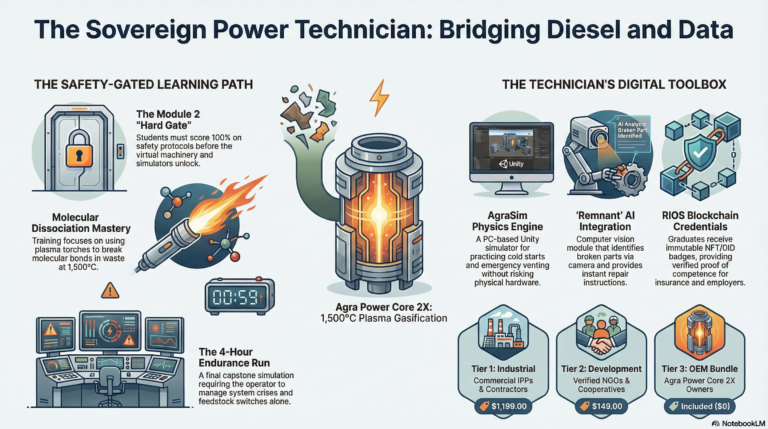
- Agra Energy converts agricultural waste, such as industrial hemp hurd, into syngas and electricity via plasma gasification. This provides the off-grid power necessary to run DeReticular’s sovereign nodes independently of the centralized “Permitting Wall” of the traditional power grid.
- Kurb Kars are autonomous electric mobility fleets that act as independent economic agents. They use A2A protocols to negotiate and reserve 30-minute charging slots from Agra Energy microgrids, with transactions secured via x402 micro-payment channels.
- Bayesian Utility Functions allow agents to maintain a probability distribution over a counterparty’s reservation price rather than using fixed bid-ask logic. This enables dynamic negotiation that updates based on factors like time decay, remaining inventory, and local demand.
Part 3: Essay Questions
Instructions: Use the source materials to develop comprehensive responses to the following prompts. (Answers not provided).
- The Shift to Multi-Agent Systems (MAS): Analyze the transition from single-agent task execution to autonomous Multi-Agent Systems. How do standardized protocols like A2A and MCP enable a “machine-to-machine” economy without human intervention?
- Overcoming the “Permitting Wall”: Discuss the concept of the “Permitting Wall” in the context of centralized infrastructure. How does DeReticular’s model of “Spherical Resilience” and off-grid plasma gasification provide a strategic alternative for high-density AI compute?
- The Core Reservation Lifecycle: Detail the five stages of the A2A reservation lifecycle (Discovery, Task Delegation, Escrow/Reservation, Execution, and Settlement). Why is cryptographic escrow essential for autonomous machine commerce?
- Economic Impact and Regional Development: Evaluate the projected economic impact of DeReticular’s relocation to Topeka, Kansas. Consider job creation, value-added agriculture, capital attraction, and the role of local partners like Washburn University and Plug and Play Topeka.
- Quality of Life and Talent Recruitment: Explain how Topeka’s recreational assets (e.g., Lake Shawnee, Shunga Trail, NOTO Arts District) serve as a strategic component for DeReticular’s long-term growth and employee retention.
Part 4: Glossary of Key Terms
Term Definition
A2A (Agent-to-Agent) An open protocol standardizing peer-to-peer discovery, negotiation, and task delegation between independent AI agents.
Agent Card A standardized JSON file (/.well-known/agent.json) used by agents to publish their identity, capabilities, endpoints, and pricing.
Agra Energy A DeReticular partner that utilizes plasma gasification to convert biomass (like hemp hurd) into syngas and off-grid electricity.
AEA (Autonomous Economic Agent) A framework for multi-agent negotiation, market discovery, and smart-contract value exchange in an open market ecosystem.
Bayesian Utility Negotiating Agents AI agents that use probabilistic models to estimate a counterparty’s pricing constraints and update them during a negotiation.
DeReticular An AI research and industrial infrastructure venture studio focused on autonomous, off-grid infrastructure networks.
ERC-8183 A machine-readable contract state primitive on Ethereum used for job states (Open, Funded, Completed, etc.) and automated settlement.
Heartland Synergy Park The test site in Topeka (Forbes Field) used for construction, renovation, and testing of containerized compute nodes.
Kurb Kars Autonomous mobility fleets that operate within the DeReticular ecosystem to execute freight booking and charging reservations.
MCP (Model Context Protocol) A protocol developed by Anthropic that connects individual LLM agents to internal database tools and APIs.
Project Octagon DeReticular’s global mesh network consisting of eight nodes designed for autonomous load balancing and sovereign compute.
RIOS (Rural Infrastructure OS) DeReticular’s flagship software platform that orchestrates energy generation, edge compute, and autonomous mobility.
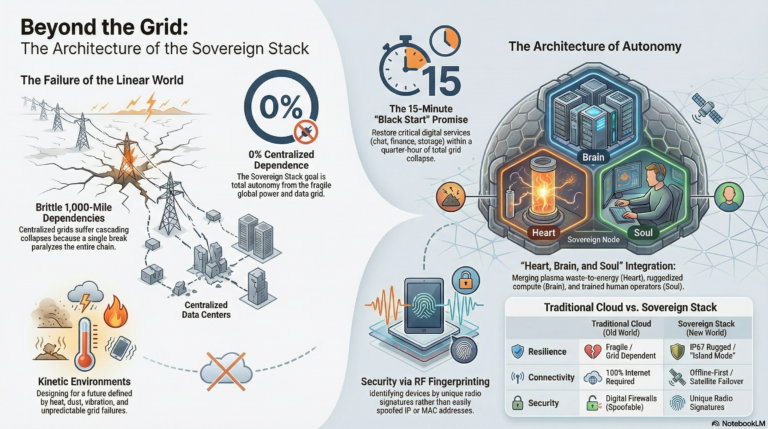
The Sovereign Stack A localized, autonomous infrastructure model that integrates power, compute, and transit into self-funding economic nodes.
The Spark Spread The arbitrage margin between local energy generation costs and the market value of AI compute inference.
TPM 2.0 (Trusted Platform Module) Hardware-secured cryptographic modules used as oracles to verify that physical work has been completed before releasing digital payments.
x402 (HTTP 402) A protocol for machine-to-machine micro-payments and cryptographic escrow settlement.