Study Guide: The DeReticular Sovereign Infrastructure Ecosystem
This study guide provides a comprehensive overview of the DeReticular Sovereign Architecture, a systems-engineering framework designed to replace centralized, fragile infrastructure with self-sustaining, air-gapped nodes. The following sections include a short-answer quiz to test technical comprehension, a separate answer key, suggested essay topics for deeper analysis, and a glossary of specialized terminology.
Technical Comprehension Quiz
Instructions: Provide 2–3 sentences for each answer based on the provided source context.
- Define the conceptual difference between “The Line” and “Spherical Resilience.”
- How does the DeReticular Sovereign Architecture transform WordPress 7 into an Autonomous Economic Command Center (AECC)?
- What is the purpose of a “Virtual Transmission Line” (VTL) and how is it executed physically?
- Explain the regulatory significance of West Virginia H.B. 2014 for Agra Dot Energy generation sites.
- How does the “Captive AI Compute Arbitrage Engine” improve the unit economics of localized energy generation?
- What are the primary functions of the WISP-in-a-Box product line within the sovereign stack?
- Describe the “Compliance-by-Architecture” approach to HIPAA security and how it differs from traditional cloud compliance.
- What specific role does the TPM 2.0 hardware module play in the Sovereign Terminal’s security framework?
- How does the Guam Campus deployment address both biological and atmospheric threats to infrastructure?
- What are the primary engineering advantages of transitioning the Sovereign Stack to NixOS and Rust-based engines?
Answer Key
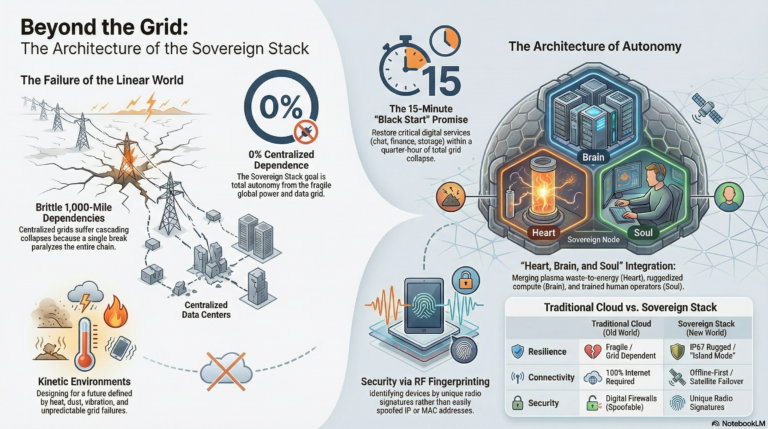
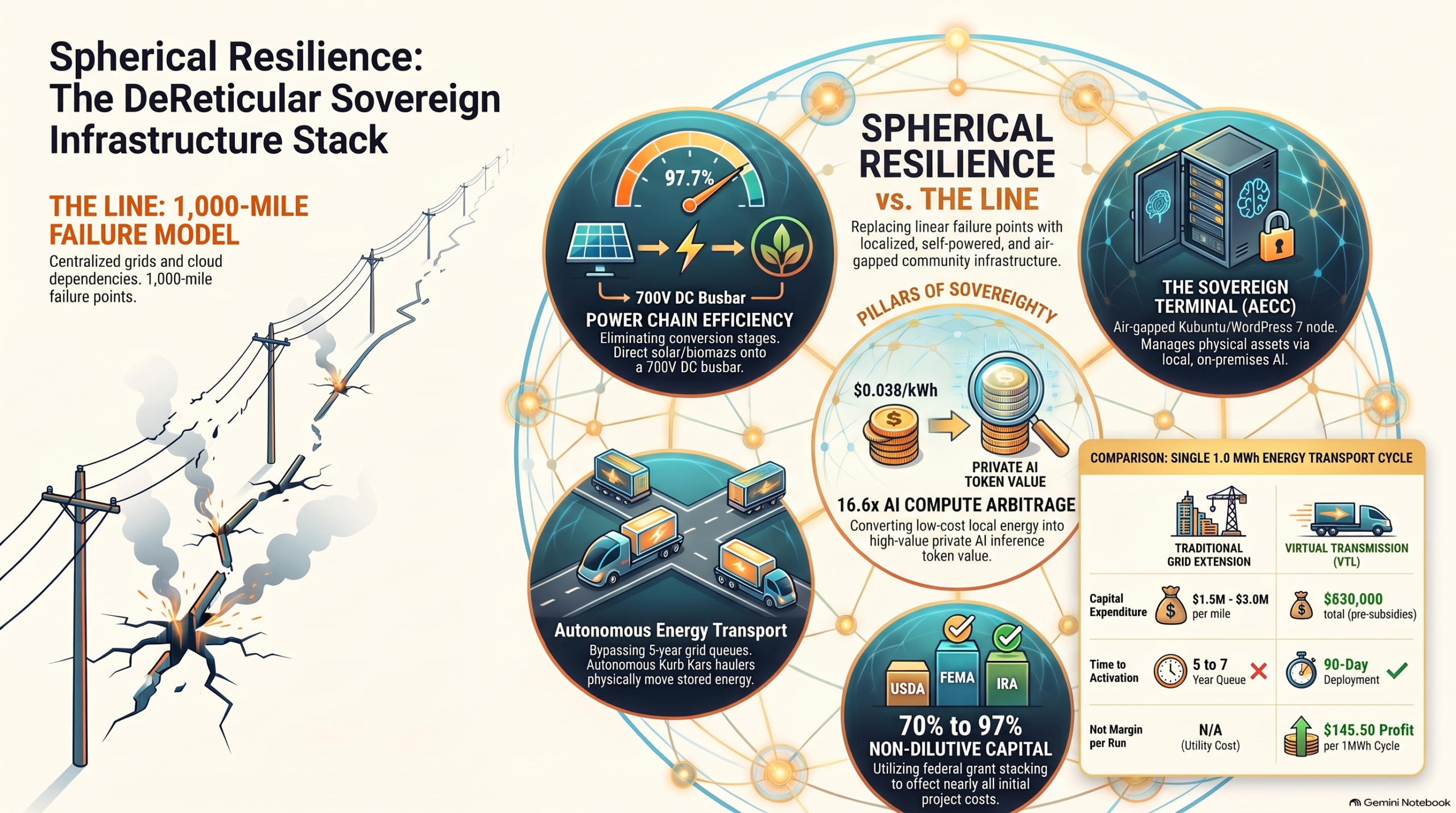
- “The Line” represents a brittle, centralized failure model where a single break in utility grids, cloud providers, or telecom backbones causes total local collapse. In contrast, Spherical Resilience describes an architecture where every node operates in “Island Mode,” maintaining absolute physical, computational, and economic independence through localized generation and air-gapped intelligence.
- In the DeReticular stack, WordPress 7 is upgraded with the dereticular-sovereign-core plugin and runs on a hardened Kubuntu or NixOS node. It uses Custom Post Types as physical state ledgers to manage assets like battery storage and fleet logistics, interfacing directly with local SCADA buses and P2P communication layers.
- A Virtual Transmission Line bypasses the 5-to-7-year utility interconnection queues by moving bulk electrons physically over roads via containerized Mobile BESS units. These units, such as the Project Octagon skids mounted on Kurb Kars chassis, transport stored electrochemical energy from generation nodes to regional substations for peak-hour discharge.
- West Virginia H.B. 2014 (The Power Generation and Consumption Act) allows generation sites to be certified as Certified Microgrid Districts. This legal framework permits behind-the-meter sites to bypass Public Service Commission rate regulation and avoid regional grid interconnection delays, enabling direct industrial and AI compute utilization of local power.
- The Arbitrage Engine directs surplus baseload energy into liquid-cooled GPU racks rather than exporting it to the grid at low wholesale rates. This converts energy worth 0.04–0.06/kWh into billable AI inference tokens worth 0.65–1.00/kWh, representing a 16.6x economic expansion factor.
- WISP-in-a-Box provides carrier-class autonomous wireless mesh connectivity to off-grid locations. It ranges from Lite gateways to Command Center masts that establish a 15-km radius of high-bandwidth, self-sustaining telecommunications infrastructure for regional mesh networking.
- Traditional HIPAA compliance relies on “Compliance-by-Paperwork” and third-party agreements (BAAs) that do not prevent breaches. DeReticular’s “Compliance-by-Architecture” enforces security through hardware mechanics, such as TPM 2.0 access control, air-gapped local processing, and cryptographic Zero-Knowledge Proofs that ensure Protected Health Information (PHI) never leaves the premises.
- The TPM 2.0 module serves as a hardware root of trust that enforces cryptographic identity and disk encryption. It ensures the node will not decrypt local data if the boot configuration is altered and provides hardware-attested signatures for clinical ledgers and industrial audit trails.
- The Guam Campus utilizes autonomous UGV rovers and thermal sensors to detect and eradicate the invasive brown tree snake, which causes frequent substation shorts. During typhoons, the site transitions to its Agra/Pawnee microgrid, maintaining civil-defense Command and Control (C2) and electrical continuity even when the commercial grid and undersea cables are severed.
- Transitioning to NixOS provides an immutable, declarative system state with atomic rollbacks, significantly reducing the memory footprint and attack surface compared to Kubuntu. Rust-based engines (like Axum) offer single-binary execution and microsecond performance, replacing the high latency and bloat of interpreted PHP runtimes.

Suggested Essay Questions
- The Economic Case for Sovereign Infrastructure: Analyze how the combination of non-dilutive grant stacking (USDA, FEMA, IRA) and behind-the-meter AI compute arbitrage creates a sustainable financial model for rural industrialization.
- Bypassing the Reticulum: Evaluate the effectiveness of Freenet River and Reticulum Network stacks in maintaining community governance and economic settlement during a total “Black-Sky” event where centralized internet and power are lost.
- The Evolution of Prime Power: Compare the baseline Pawnee Wankel rotary GenSet against the “Pragmatic Sovereign” alternatives—Mainspring Linear Generators and Capstone Microturbines—focusing on thermal efficiency, maintenance intervals, and fuel flexibility.
- Sovereign Clinical Continuity: Discuss the ethical and operational implications of deploying air-gapped Sovereign Clinical Terminals in “Bush Gap” regions like rural Uganda or Appalachia, specifically regarding diagnostic accuracy and patient data ownership.
- Mobility as Infrastructure: Explore the concept of Kurb Kars as an infrastructure company rather than an automotive manufacturer. How does the use of pre-homologated “skateboard” chassis and interchangeable “top-hats” accelerate the deployment of autonomous logistics?
Glossary of Key Terms
Term Definition
AECC Autonomous Economic Command Center; a sovereign node that independently manages physical assets, settles transactions, and coordinates logistics.
Agra Dot Energy The physical generation entity focusing on biomass gasification, solar-thermal troughs, and behind-the-meter prime power.
BESS Battery Energy Storage System; utilizing chemistries like Lithium Iron Phosphate (LFP) or Sodium-Ion (Na+) for stationary or mobile energy reserves.
Biochar A high-carbon byproduct of pyrolysis used for soil re-mineralization and permanent carbon sequestration ($350/ton market value).
Bush Gap The systemic deficit of power, telecommunications, and healthcare infrastructure that prevents frontier and rural markets from industrializing.
Freenet (Locutus) A Rust-based, decentralized, serverless network using WebAssembly (Wasm) state contracts for un-censorable data dissemination.
Freenet River A serverless, P2P, end-to-end encrypted messaging protocol for real-time coordination and command-and-control.
Island Mode A state of operation where a microgrid or compute node functions independently of the public utility grid or centralized internet.
Noel’s Law The axiom stating that system resilience is inversely proportional to its dependency on single-path centralized choke points.
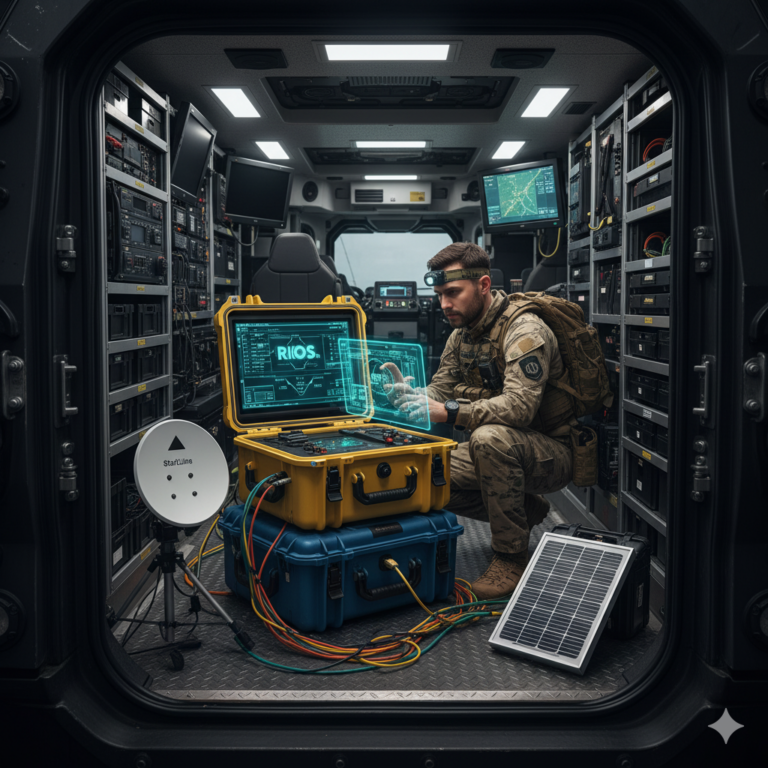
Project Octagon Hardened, containerized microgrid and compute skids designed for rapid deployment in extreme edge or disaster environments.
Remnant AI An on-premises, air-gapped cognitive engine used for clinical diagnostics, economic arbitrage, and industrial SCADA orchestration.
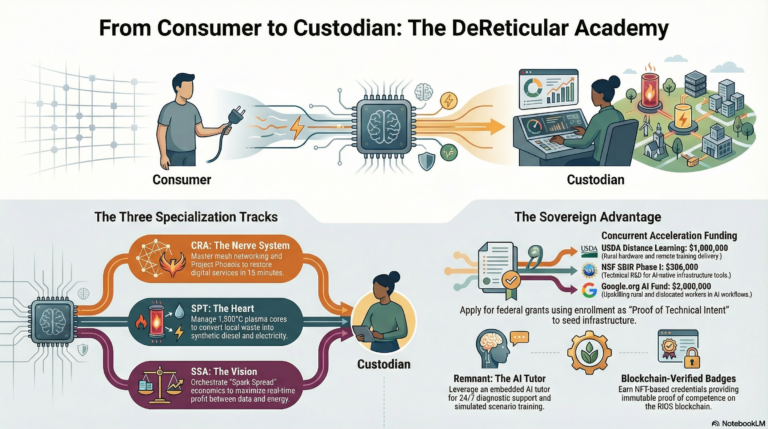
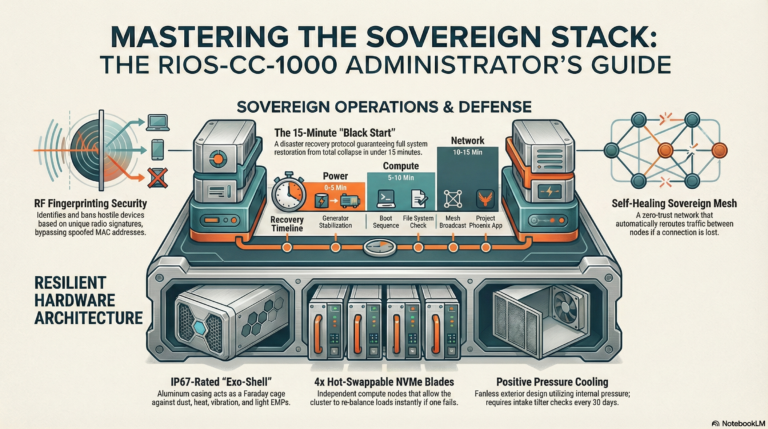
RIOS™ Rural Infrastructure Operating System; the unified hardware and software platform governing power, compute, and communications for sovereign nodes.
The Line A metaphor for centralized, linear infrastructure dependencies (e.g., high-voltage grids, public clouds) that concentrate systemic risk.
TPM 2.0 Trusted Platform Module; a hardware security chip that provides a cryptographic root of trust for node attestation and data protection.
Virtual Transmission Line (VTL) The physical transportation of electrochemical energy via roads using Mobile BESS units to bypass grid interconnection bottlenecks.
Zenoh A high-performance, zero-broker pub/sub middleware designed for sub-millisecond industrial SCADA and robotics communication.