Study Guide: The Hyper-Connected Wilderness Business Model
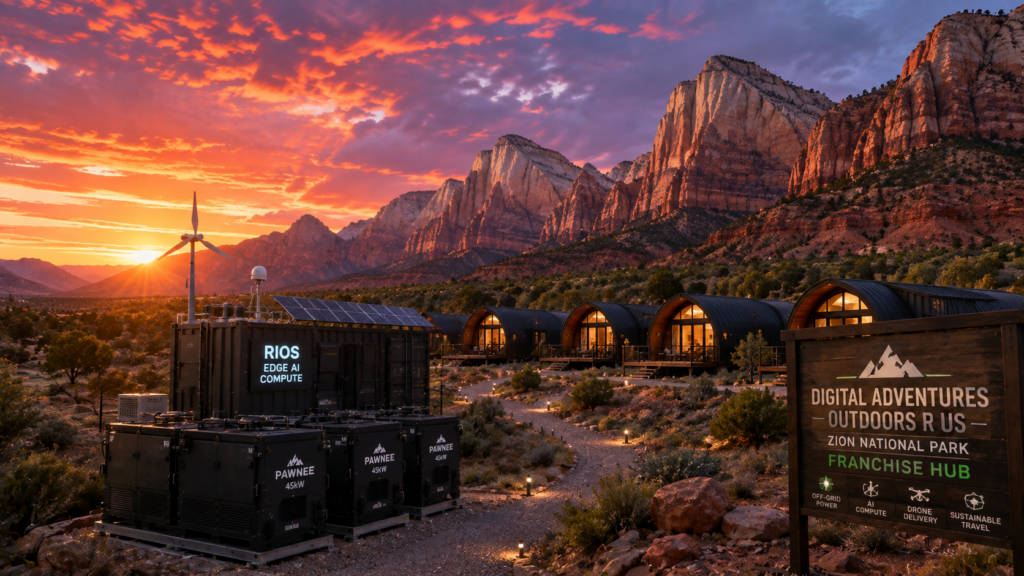
This study guide provides a comprehensive overview of the business plan and technological architecture for Digital Adventures Outdoors R Us LLC. It explores the convergence of luxury eco-hospitality, sovereign technology, and decentralized infrastructure within the framework of West Virginia’s microgrid legislation.
Part I: Short-Answer Quiz
Instructions: Answer the following questions in 2–3 sentences based on the provided source context.
- What is the primary difference between the “Old Way” and the “Hyper-Connected Way” regarding wilderness logistics?
- How does West Virginia House Bill 2014 (H.B. 2014) benefit the company’s development timeline?
- Describe the “Dual-Revenue Hospitality Engine” utilized by the flagship resort.
- What is the “Captive Power Requirement,” and how does the company satisfy it?
- What role does “Agent-to-Agent” (A2A) orchestration play in the guest’s booking experience?
- How are the luxury eco-pods constructed, and what are their environmental benefits?
- Describe the mid-trail meal delivery system and the hardware involved.
- What is the “WVU Energy Student Pipeline,” and how is it integrated into the resort’s operations?
- According to the SWOT analysis, what is one major internal weakness and one external threat the company faces?
- Outline the three phases of the company’s 10-year strategic growth roadmap.
Part II: Answer Key
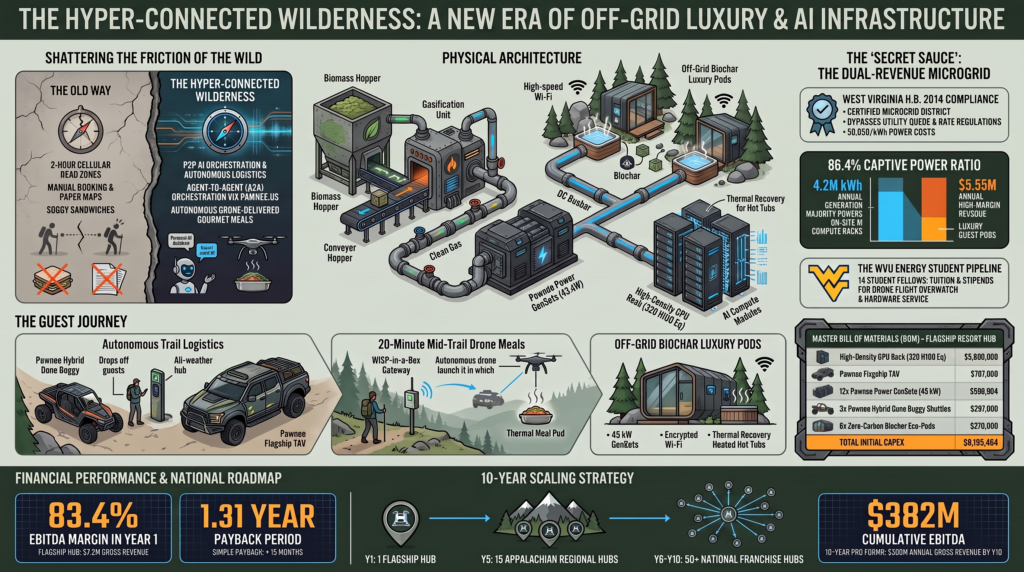
- Wilderness Logistics: The “Old Way” relies on manual shuttle coordination and physical preparations that result in “friction,” such as cellular dead zones and soggy backpack meals. The “Hyper-Connected Way” replaces this with autonomous trailhead shuttles (Pawnee Buggies), P2P AI agent orchestration, and 20-minute mid-trail drone deliveries of hot gourmet meals.
- H.B. 2014 Benefits: By designating sites as Certified Microgrid Districts under H.B. 2014, the company can bypass the “Permitting Wall” and multi-year utility interconnection queues. This allows the company to acquire status in 60 days and build off-grid capacity at 1/10th the time and cost of legacy grid extensions.
- Dual-Revenue Engine: The resort operates as both a luxury lodging destination and an AI compute center. On-site GenSets produce low-cost power ($0.038/kWh) that is split between guest amenities and a containerized AI compute rack (Compute-as-a-Service), which generates high-margin revenue to subsidize resort operations.
- Captive Power Requirement: To remain exempt from Public Service Commission (PSC) regulations, the hub must consume at least 70% of its generated power on-site. The company achieves an 86.42% ratio by using the majority of its electricity (3,285,000 kWh/year) to power the high-density GPU racks for AI compute.
- A2A Orchestration: Guest AI agents communicate directly with the Digital Adventures Agent via the Pawnee.us sovereign network to negotiate itineraries without the guest visiting websites or typing credit card details. This system automates the booking of accommodations, autonomous shuttles, and meal deliveries through the RIOS kernel and OpenClaw protocols.
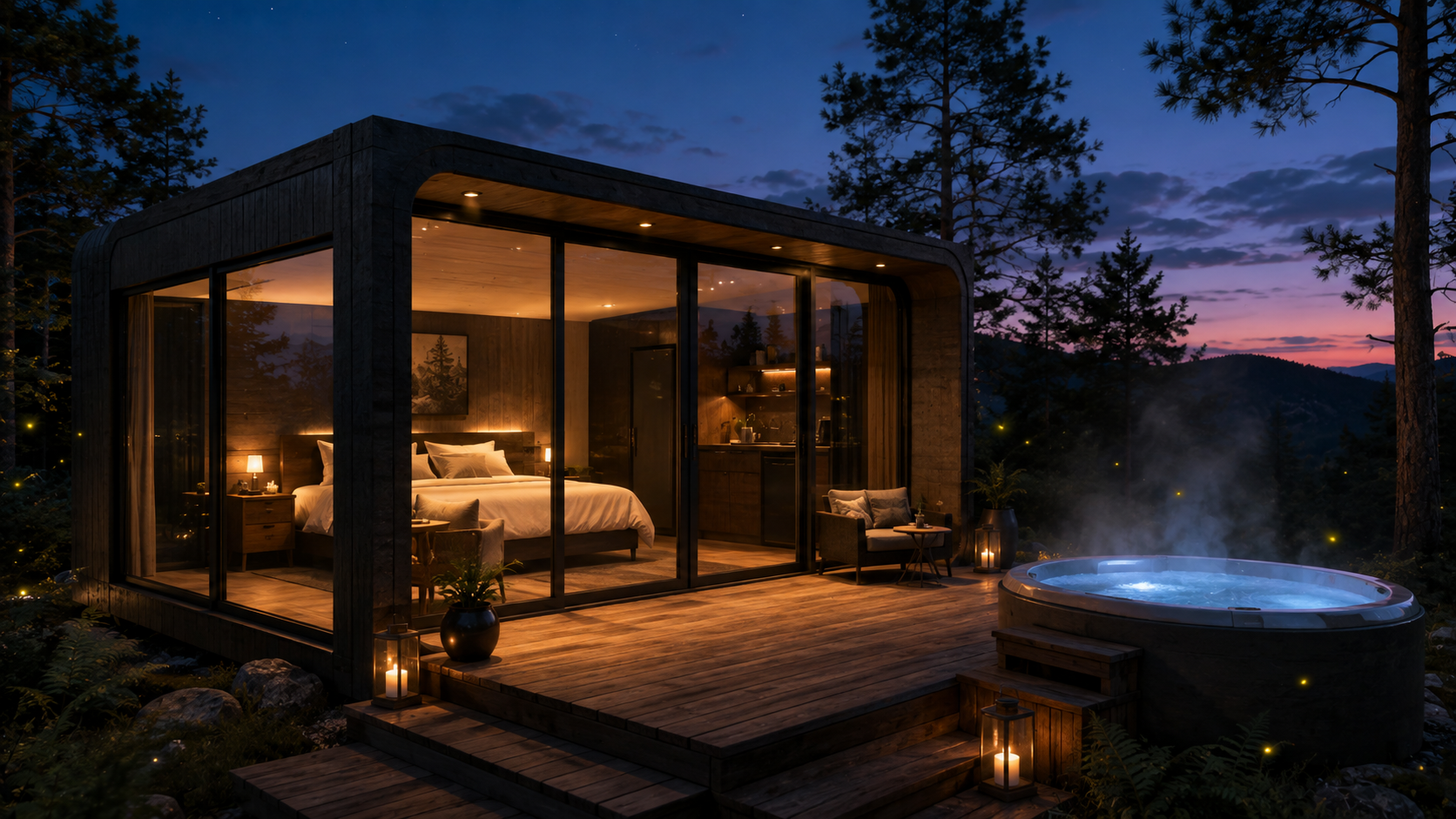
- Eco-Pod Construction: The pods are built at the Node 5 manufacturing hub using structural biochar-composite panels made from gasifier ash. These panels provide a high insulation value (R-38), fire resistance, and negative carbon embodied intensity, making the structures both luxury-grade and environmentally restorative.
- Mid-Trail Deliveries: When a guest’s wearable beacon connects to a trail-side WISP-in-a-Box gateway, the AI agent offers a meal. Once confirmed, an autonomous drone launches from a Pawnee Flagship TAV, tracks the hiker’s GPS, and lowers a thermal meal pod via a winch.
- WVU Energy Student Pipeline: This is a partnership with West Virginia University that provides a “living laboratory” for 14 student fellows who receive full tuition and stipends. These students are funded by 2.43% of gross resort revenues and perform tasks such as operating A2A nodes, overseeing drone flights, and maintaining GenSets.
- SWOT Findings: One internal weakness is the high initial capital expenditure of approximately $8.19 million per hub and the reliance on specialized technical talent. An external threat is severe mountain weather, which could disrupt drone flight operations, requiring the use of all-weather backup transport like the Pawnee TAV.
- Growth Roadmap: Phase 1 involves the flagship deployment at New River Gorge (Years 1–2). Phase 2 focuses on an Appalachian Cluster Expansion to 15 regional hubs (Years 3–5). Phase 3 targets national franchise scaling across U.S. National Parks and global licensing of the Sovereign Stack (Years 6–10).
Part III: Essay Questions
- The Intersection of Legislation and Technology: Analyze how West Virginia House Bill 2014 acts as the “legal catalyst” for the Digital Adventures business model. How does this legislation allow the company to ignore traditional utility constraints?
- Economic Resilience through Revenue Diversification: Discuss the strategic importance of the Compute-as-a-Service (CaaS) revenue stream. How does the 24/7/365 nature of AI compute protect the company from the seasonal volatility inherent in the tourism industry?
- The Sovereign Stack Architecture: Evaluate the role of the “Sovereign Stack” and the RIOS kernel in creating a “frictionless” guest experience. How does the use of a private network like Pawnee.us differ from traditional internet-based hospitality platforms?
- Sustainability and the Circular Economy: Describe the circular relationship between biomass gasification, biochar production, and resort infrastructure. How does the company transition from a carbon-neutral to a carbon-negative footprint through its construction and energy practices?
- Risk Management in Rugged Environments: Using the SWOT analysis as a guide, assess the operational risks of running a high-tech resort in the Appalachian wilderness. How do the various Pawnee hardware products (TAVs, Buggies, WISPs) mitigate these environmental and technical challenges?
podcast
Part IV: Glossary of Key Terms
Term Definition
A2A (Agent-to-Agent) A communication model where autonomous software agents negotiate and execute transactions (like bookings) on behalf of humans.
Behind-the-Meter (BtM) Energy generated and consumed on-site, bypassing the traditional utility grid and associated transmission costs.
Biochar A charcoal-like substance produced from biomass gasification; used by the company for high-insulation construction panels and carbon credits.
CaaS (Compute-as-a-Service) A business model where on-site GPU hardware is rented out for AI processing, serving as a primary revenue stream.
Captive Power Ratio The percentage of electricity generated by a microgrid that is consumed on-site; must be ≥70% to meet H.B. 2014 standards.
H.B. 2014 West Virginia House Bill 2014, the legislation that allows for the creation of Certified Microgrid Districts with PSC exemptions.
Node 5 The company’s manufacturing hub in Monongalia County used for assembling biochar eco-pods and hardware mounts.
Pawnee Power GenSet A 45 kW rotary engine that runs on biomass syngas to provide continuous prime power for the resort.
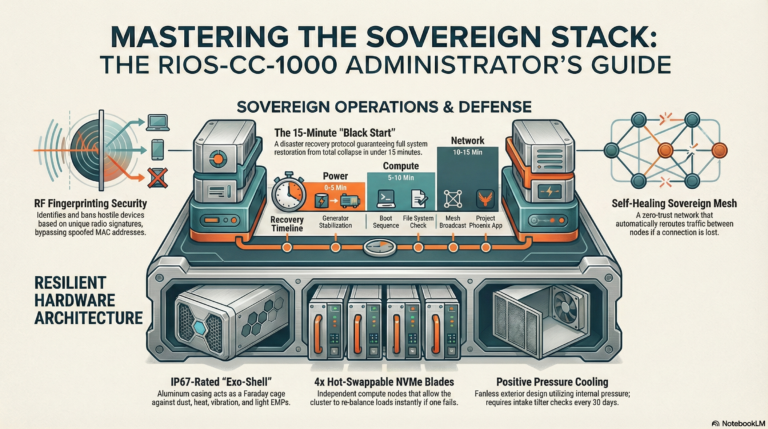
RIOS Kernel The proprietary operating system used by the WISP-in-a-Box gateways to manage A2A orchestration and autonomous systems.
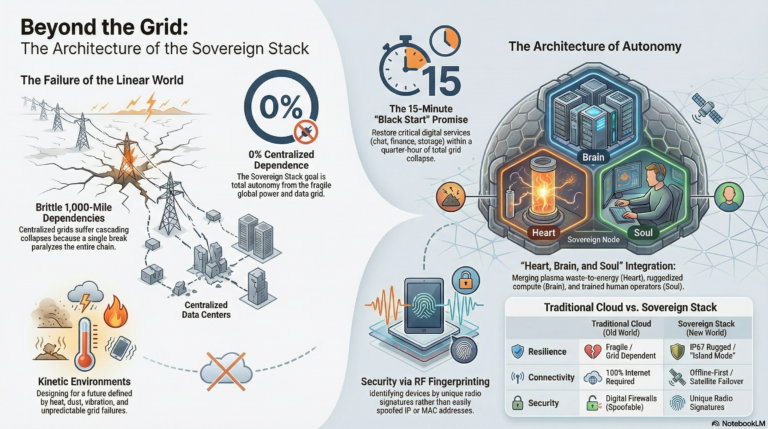
Sovereign Stack An integrated architecture of hardware and software designed to operate independently of centralized utility or data providers.
TAV (Tactical Vehicle) The Pawnee Flagship Tactical Vehicle; a high-cost mobile unit used for drone launches and all-weather transport.
WISP-in-a-Box A series of gateway devices (Agentic, LTE, or Base) that provide encrypted Wi-Fi and mesh networking in remote areas.