System Integration Plan: The Industrial Foreman Retrofit Framework
In the current industrial landscape, the transition from legacy “Island Mode” operations to automated, software-defined environments is no longer an option—it is a strategic necessity. For remote farms, clinics, and transit corridors, the lack of deterministic coordination between power generation and demand creates significant economic leakage through energy waste and manual clerical overhead. The SOV-AUTO-GRID (Industrial Foreman) framework is engineered to eliminate these inefficiencies by deploying edge computing at the point of operation. By bridging the gap between digital logic and physical machinery, we enable sovereign infrastructure that turns “solar clipping” and administrative friction into measurable operational value.
1. Strategic Integration Vision
The core objectives of this integration plan are:
- Interoperability: Establishing a seamless communication bridge between modern software agents and legacy hardware via standardized serial protocols and normalized data streams.
- Efficiency: Driving 100% resource utilization through real-time, autonomous decision-making, removing the delays inherent in human-in-the-loop systems.
- Risk Mitigation: Implementing field-hardened safety protocols and hardware-level protections to ensure that automated logic never compromises mechanical integrity.
The Industrial Foreman serves as a “Force Multiplier” for the Operator Persona—specifically Farmers, Solar Microgrid Operators, and Logistics Managers. It transforms the role of the operator from a manual monitor to a strategic overseer. However, the success of this high-level software logic is fundamentally dependent on the integrity of the physical connection—the “Physical Bridge”—linking the code to the steel.
2. The Physical Bridge: Hardware Interconnectivity Specifications
Reliable hardware communication in rugged, “field-hardened” environments requires more than simple connectivity; it demands resistance to electrical noise and physical degradation. This framework utilizes shielded, industrial-grade interfaces designed to maintain signal integrity amidst the high-EMF environments typical of solar arrays and engine rooms.
Hardware Bill of Materials (BOM)
The following components are included in the SOV-AUTO-GRID kit. All hardware is shipped in DeReticular branded anti-static packaging to prevent ESD damage during transit.
| Component | SKU | Technical Specifications | Role |
| Industrial Interface Cable | CBL-IND-01 | 6ft, USB-to-RS485, FTDI Chipset, Shielded | Main data conduit between Sentry Node and machinery. |
| RS-485 Terminal Block | N/A | 2-wire termination (Data+, Data-, GND) | Enables direct wiring to legacy PLC and inverter ports. |
| Quick Start Card | N/A | Heavy-duty laminated card | Provides pinout diagrams and setup wiki access. |
Legacy Interfacing
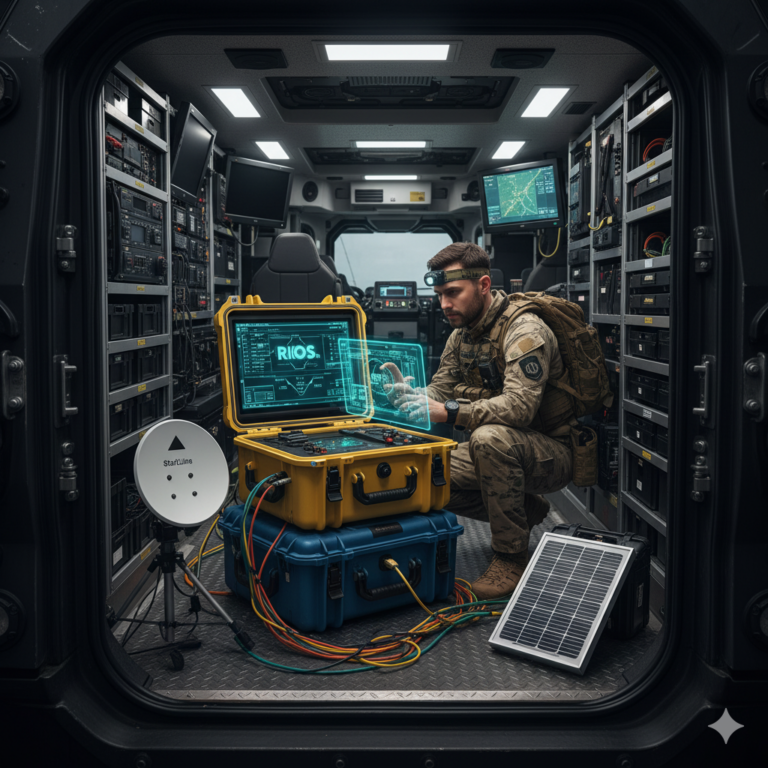
The “Physical Bridge” is anchored by the RS-485 terminal block. This interface allows the Sovereign Sentry or Nomad node to interface directly with the 2-wire communication ports (Data+, Data-) of legacy Programmable Logic Controllers (PLCs) and leading solar inverters including Victron, Growatt, and SMA. This retrofit capability ensures that existing infrastructure can be upgraded to autonomous status without the capital expenditure of a total hardware overhaul.
3. Software Architecture and the Logic Engine
The software stack translates raw industrial protocols into human-readable, actionable JSON data. This normalization allows for cross-platform logic; for instance, a Victron inverter and a Growatt inverter can trigger the exact same Node-RED automation because the data is normalized at the edge.
The Logic Stack and Architecture
The environment is optimized for Raspberry Pi 5 or Intel N100/i3 architectures and consists of:
- OpenClaw “Foreman” Image: The
dereticular/openclaw-industrialDocker container, pre-loaded withpyserialandpymodbuslibraries. - Node-RED Container: A low-code logic engine that allows operators to modify operational parameters without recompiling the core agent.
- Protocol Library: A comprehensive repository of JSON definitions for industrial registers, including SunSpec Modbus, Victron Hex, and NMEA 0183.
Protocol Translation Layer
The system supports Modbus RTU, CAN Bus (via adapter), NMEA 0183, and MQTT. This layer’s primary value is the transformation of raw hexadecimal serial data into structured JSON objects. By abstracting the hardware layer, the logic engine can execute sophisticated commands, such as cross-referencing real-time battery voltage against external weather APIs to predict energy availability.
4. Operational Mode A: The Grid Balancer (Energy Optimization)
In off-grid scenarios, energy independence is often undermined by “Solar Clipping”—a state where an inverter ceases production because batteries have reached capacity. The Grid Balancer mode captures this wasted potential.
Logic Execution Workflow: The Smart Farm
The agent utilizes a deterministic logic sequence to ensure 100% energy utilization. In a “Smart Farm” scenario, the agent monitors soil moisture via LoRaWAN mesh beacons.
- Monitoring SoC: The agent reads the battery State of Charge (SoC).
- Environmental Check: The agent queries soil moisture levels (<30%) and humidity (>60% for night cycles).
- Logic Trigger:
IF Battery > 95% AND Solar_Potential > Load THEN Trigger_Dump_Load. - Action: The agent triggers a relay to run irrigation pumps or divert power to water heaters. On a Sentry Pro, this excess energy can be diverted to crypto-mining, converting surplus sunlight into Locutus Credits.
5. Operational Mode B: The Supply Chain Diplomat (Logistics Automation)
Logistics efficiency is frequently crippled by manual paperwork at border crossings and transit depots. The Industrial Foreman utilizes geofencing and sensor monitoring to automate the document lifecycle.
Geofencing and Cold Chain Auditing
Using the Nomad Fleet Kit, the agent monitors GPS streams via Traccar. In a “Cold Chain” scenario—such as the transport of premium wagyu beef—the agent monitors temperature thresholds (-4°C).
- Trigger: If Nomad sensors detect internal fridge temperatures rising to -2°C, the agent blasts high-priority WhatsApp/Telegram alerts to the dispatcher.
- The Geofence Mechanism: As the vehicle approaches a 5km perimeter of a delivery depot or border crossing, the agent initiates automation.
Automated Document Lifecycle
- Data Compilation: The agent aggregates the cargo manifest from the local database.
- PDF Generation: A formal Customs Declaration is instantly generated.
- Cryptographic Signing: The document is signed via the driver’s Sovereign Key, ensuring non-repudiation and security.
- LTE Dispatch: The signed PDF is transmitted via LTE to the broker, ensuring the paperwork arrives before the vehicle.
6. Risk Mitigation and Operational Safety Protocols
Connecting software to heavy machinery requires rigorous safety frameworks to prevent hardware damage from logic loops or incorrect wiring.
Risk Register and Mitigations
| Risk ID | Description | Technical Mitigation |
| R-PHY-01 | Wiring Error: Swapping Data+ and Data- wires. | Included adapter features built-in short-circuit protection; software includes a “Polarity Check” diagnostic tool. |
| R-LOG-01 | Infinite Loop: Rapid relay toggling damaging equipment. | Implementation of Hysteresis logic (mandatory 5-minute state-change delay) to protect physical relays. |
| R-COMP-01 | Firmware Update: Manufacturer changes break register maps. | Centralized Protocol Library updates via Docker pull to sync with new register definitions. |
The “Safety Dampener” Analysis
The mandatory 5-minute Hysteresis delay is a critical architectural requirement. This “Safety Dampener” prevents fluctuating sensor data or software glitches from “chattering” physical relays. By enforcing a minimum time between state changes, we preserve the mechanical lifespan of the infrastructure.
7. Deployment and Fulfillment Roadmap
The deployment of the Industrial Foreman is a hybrid process, synchronizing digital provisioning with physical hardware delivery.
Phased Implementation Workflow
- Digital Provisioning (Immediate): Upon purchase, the system generates a cryptographic License Key. The customer’s email is whitelisted for the
dereticular/openclaw-industrialregistry, and a “Welcome Aboard” email is dispatched with Docker commands and wiring diagrams. - Physical Fulfillment (Warehouse): 1x Industrial USB-to-RS485 Adapter (SKU: CBL-IND-01) and the laminated Quick Start Card are packed in anti-static packaging and shipped.
- User-Side Installation: The operator utilizes the included pinout card to wire the adapter to their equipment. The agent performs an automated discovery scan on
/dev/ttyUSB0, identifies the hardware (e.g., “Victron MultiPlus Detected”), and auto-loads the required protocol drivers.
This “Plug-and-Play” experience allows non-specialist operators to deploy sophisticated automation with minimal friction. The Industrial Foreman secures the link between digital code and industrial steel, providing the foundation for Sovereign Infrastructure and the elimination of vendor lock-in.