Comprehensive Study Guide: Decentralized Infrastructure and Agentic AI (2026)
This study guide provides a detailed synthesis of the evolving AI landscape as of May 2026, focusing on the competition between decentralized infrastructure models, represented by DeReticular and the OpenClaw framework, and centralized ecosystems, exemplified by Google’s Project Remy.

Part 1: Short-Answer Quiz
Instructions: Answer the following questions in 2–3 sentences based on the provided research reports.
- What is the core mission and philosophy of the company DeReticular?
- Describe the primary function of the Rural Infrastructure Operating System (RIOS).
- What distinguishes “Island Mode” from traditional AI agent operations?
- How do the hardware specifications of the Tier 1 Pilot Expeditionary and Tier 3 Pilot AI Core differ?
- What role does Peter Steinberger play in the 2026 AI landscape?
- How does RIOS maintain financial privacy while providing physical proof of data?
- What is Google’s Project Remy, and how does it differ from a standard chatbot?
- Explain the “Mixture-of-Recursions” (MoR) architecture in the context of Project Remy.
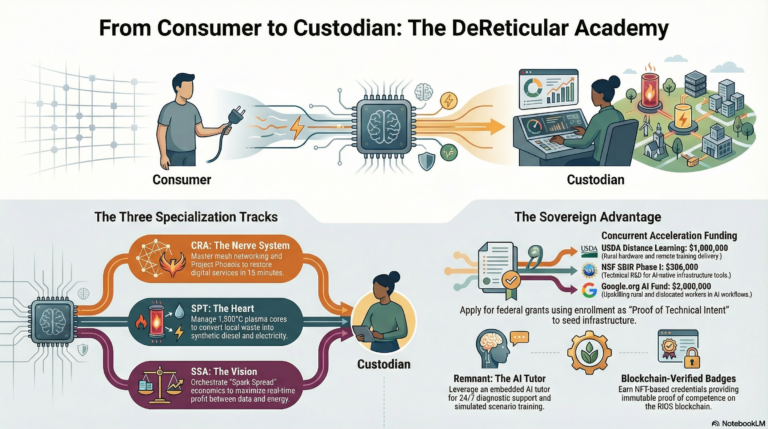
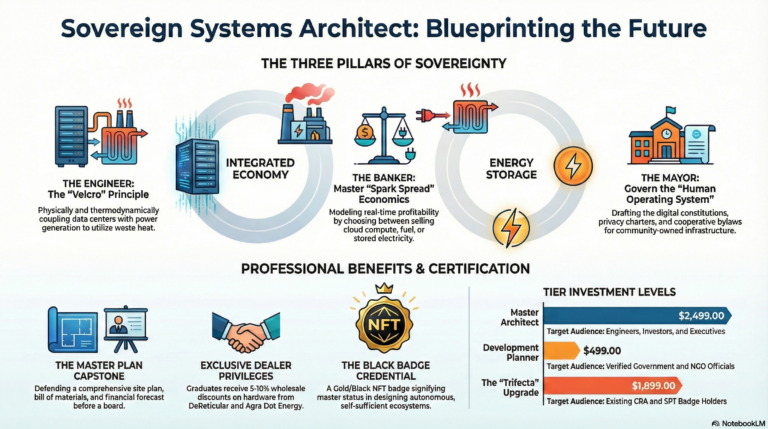
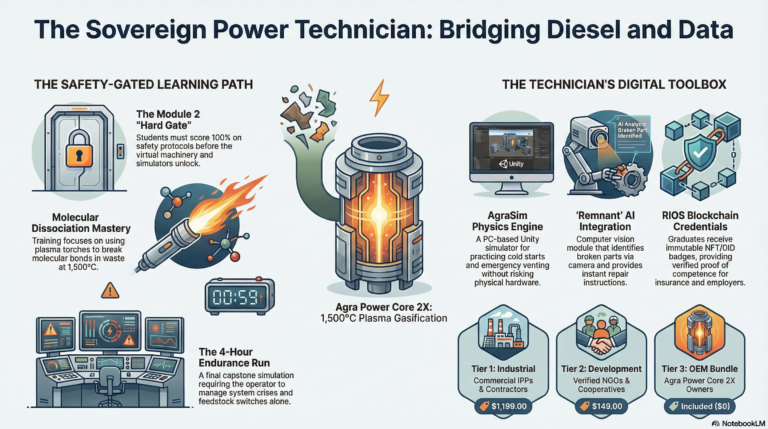
- What are the “Sovereign Badges” issued by the DeReticular Academy?
- What security vulnerability recently impacted the OpenClaw framework?
Part 2: Answer Key
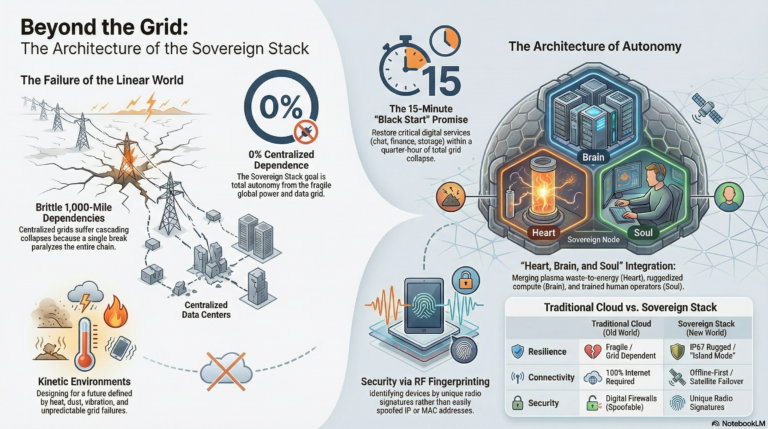
- What is the core mission and philosophy of the company DeReticular? DeReticular aims to re-industrialize the world through decentralized, self-healing infrastructure, specifically targeting rural and underserved areas. Their philosophy, “The Death of the Line,” seeks to replace fragile, centralized utility grids with “Spherical Resilience” via autonomous, air-gapped nodes.
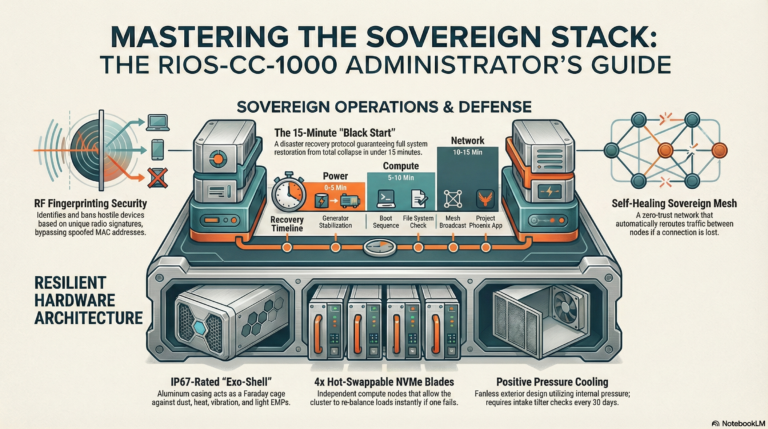
- Describe the primary function of the Rural Infrastructure Operating System (RIOS). RIOS serves as the localized “Brain” or AI-native Linux kernel for DeReticular’s decentralized nodes. It is optimized for containerized workflows and designed to facilitate “Island Mode” operations, allowing infrastructure to function entirely offline.
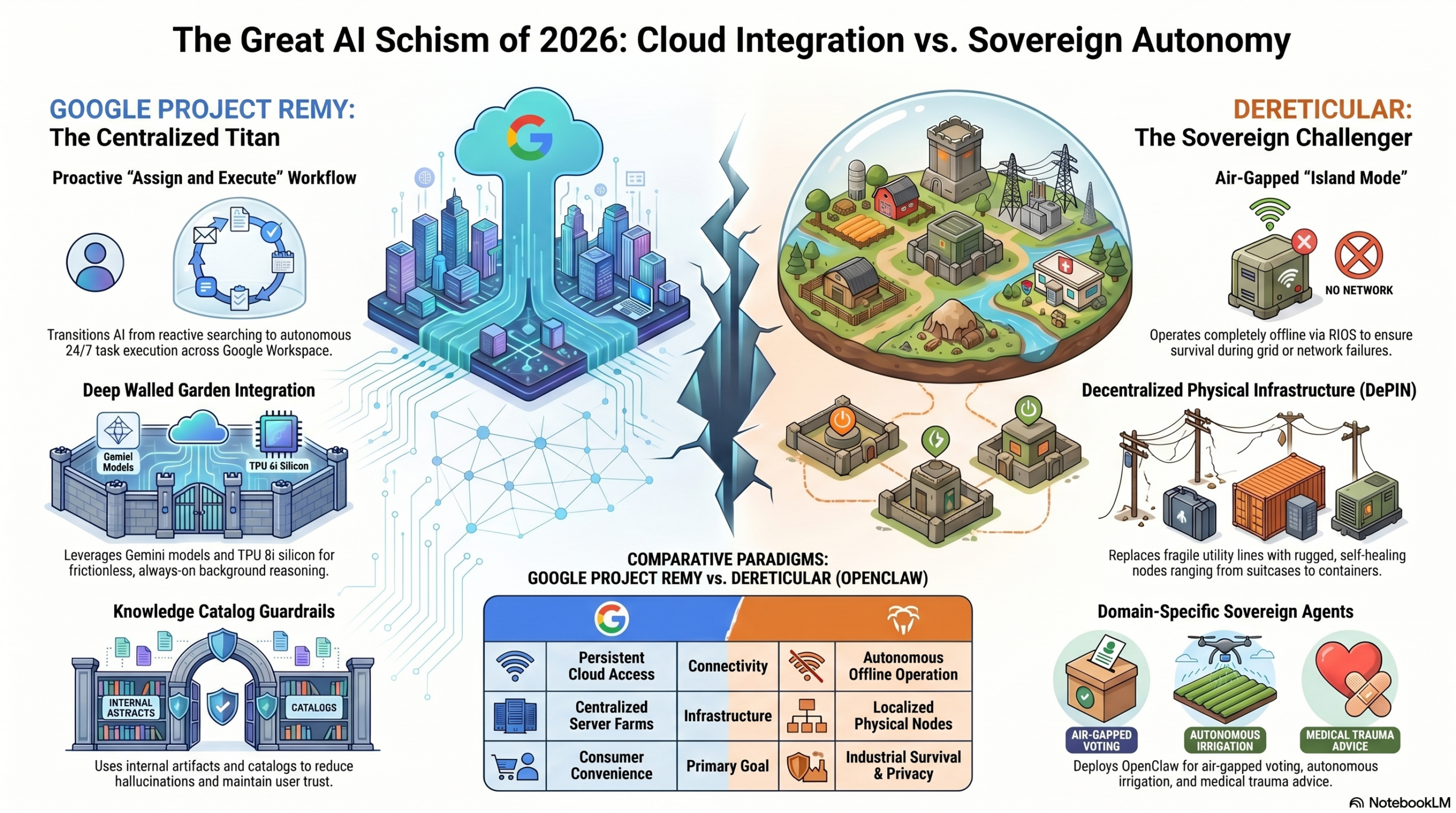
- What distinguishes “Island Mode” from traditional AI agent operations? “Island Mode” refers to an air-gapped state where AI agents run locally on physical hardware without any connection to the internet or cloud. This stands in contrast to centralized agents like Google Remy, which require persistent cloud connectivity to function.
- How do the hardware specifications of the Tier 1 Pilot Expeditionary and Tier 3 Pilot AI Core differ? The Tier 1 Pilot is a rugged 3-case suitcase system featuring an Intel Xeon processor, an NVIDIA A2 GPU, and 400W solar input. In contrast, the Tier 3 Pilot AI Core is a 20ft ISO container utilizing Dual Xeon Platinum processors, an NVIDIA A100 GPU, and 15kW solar support for much higher compute loads.
- What role does Peter Steinberger play in the 2026 AI landscape? Peter Steinberger is the developer who launched OpenClaw (originally known as Clawdbot) in late 2025. His framework has become the viral, open-source standard for building self-hosted, autonomous AI agents that operate independently of centralized providers.
- How does RIOS maintain financial privacy while providing physical proof of data? RIOS utilizes a “Split-Ledger Architecture” that keeps sensitive financial data private on local systems. Simultaneously, it uses public ledgers like Freenet/Locutus to prove “physical truths” and anchor digital data to hardware via TPM 2.0 and RF Fingerprinting.
- What is Google’s Project Remy, and how does it differ from a standard chatbot? Project Remy is an unannounced, proactive AI agent powered by Gemini models that operates 24/7 in the background. Unlike reactive chatbots that wait for user prompts, Remy monitors data like emails and calendars to execute multi-step digital errands autonomously.
- Explain the “Mixture-of-Recursions” (MoR) architecture in the context of Project Remy. MoR is a speculated architecture that allows Project Remy to remain “always-on” for consumers in an economically viable way. It optimizes reasoning processes, working alongside TPU 8i silicon to reduce the massive compute costs typically associated with continuous background AI activity.
- What are the “Sovereign Badges” issued by the DeReticular Academy? Sovereign Badges are Soulbound NFTs (Non-Fungible Tokens) that serve as digital credentials for access control. They are used within the DeReticular ecosystem to govern who can access specific decentralized infrastructure and services.
- What security vulnerability recently impacted the OpenClaw framework? OpenClaw recently suffered from a highly publicized security collapse involving CVE-2026-25253. This vulnerability, along with associated supply chain attacks, has been a primary driver for competitors like Google to position their own agents as more secure alternatives.
——————————————————————————–
Part 3: Essay Questions
- Centralization vs. Decentralization: Analyze the fundamental ideological split between Google’s Project Remy and DeReticular’s RIOS. In your response, address the trade-offs between “out-of-the-box” consumer convenience and industrial “sovereign” autonomy.
- The Evolution of Agentic AI: Discuss the technological shift from reactive Large Language Models (LLMs) to proactive AI agents. Use Project Remy’s “action-focused layer” and OpenClaw’s multi-step task execution as primary examples.
- Security and Resilience in Infrastructure: Evaluate the “Spherical Resilience” model proposed by DeReticular. How do air-gapping, RF Fingerprinting, and local AI agents mitigate the risks inherent in traditional, centralized utility lines?
- Economic Viability of AI Agents: Examine the hardware and software optimizations (such as MoR and TPU 8i) necessary to make 24/7 AI agents viable for the mass market. Compare these cloud-based costs with the localized hardware investment required for a “City Infrastructure Nexus.”
- Privacy in the Age of Proactive AI: Contrast the privacy models of Google Remy, which requires deep access to a user’s cloud-based data, with the “Split-Ledger Architecture” and local-first approach of OpenClaw and RIOS.
——————————————————————————–
Part 4: Glossary of Key Terms
| Term | Definition |
| Agentic AI | A class of AI that moves beyond answering prompts to proactively assigning and executing multi-step tasks autonomously. |
| Air-Gapping | A security measure that involves physically isolating a computer or network from the internet to prevent remote cyberattacks. |
| DePIN | Decentralized Physical Infrastructure Networks; a model for building and maintaining physical utility grids through a distributed network of nodes. |
| Freenet / Locutus | Public ledgers used by RIOS to prove physical data truths while maintaining financial privacy through a split-ledger system. |
| Island Mode | A state in which a RIOS node operates completely offline and autonomously, relying on local compute and power. |
| Knowledge Catalog | A safety mechanism used by Google Remy to mitigate hallucinations and ensure the agent operates within a trusted set of facts. |
| Mixture-of-Recursions (MoR) | A specialized AI architecture designed for continuous, background reasoning while maintaining economic and compute efficiency. |
| OpenClaw | A framework-agnostic, open-source AI agent platform that allows for self-hosted, local control of computer environments and API routing. |
| Project Remy | Google’s internal, proactive personal assistant built into the Gemini app, designed for 24/7 background task management. |
| RF Fingerprinting | The use of unique Radio Frequency signatures to identify and anchor digital data to specific physical hardware. |
| RIOS | Rural Infrastructure Operating System; DeReticular’s AI-native, Linux-based OS designed for decentralized infrastructure nodes. |
| Silicon Sentry | A low-power hardware option from DeReticular based on a modified Apple M4 Mac Mini, capable of 5W idle AI inference. |
| Soulbound NFT | A non-transferable digital token (Sovereign Badge) used for permanent identity and access control within the DeReticular Academy. |
| TPU 8i | Google’s specialized AI silicon used to power the reasoning and background tasks of Project Remy with high efficiency. |
| Whisper AI | A local voice-to-text AI model used by the “Sovereign Executive” agent for automated filing and transcription in offline environments. |